Zlatni Rat beach on Brač: how to get there from Split, and what to know before you go
Croatia's most famous beach, explained: how to get to Zlatni Rat from Split, from Bol to the beach, what to expect, when to go and what else to see around Bol.
By Bokun Charter
9 min read
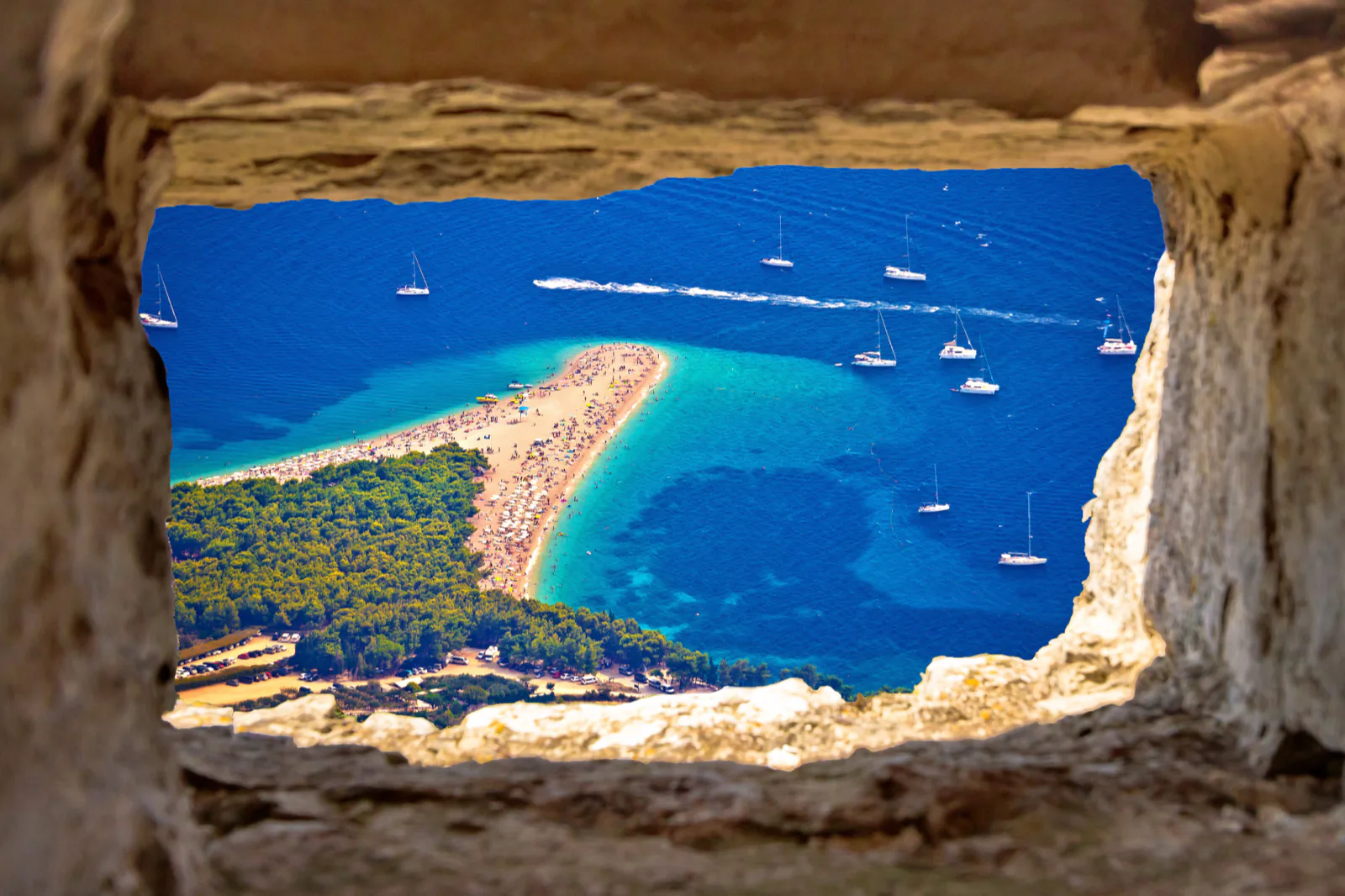
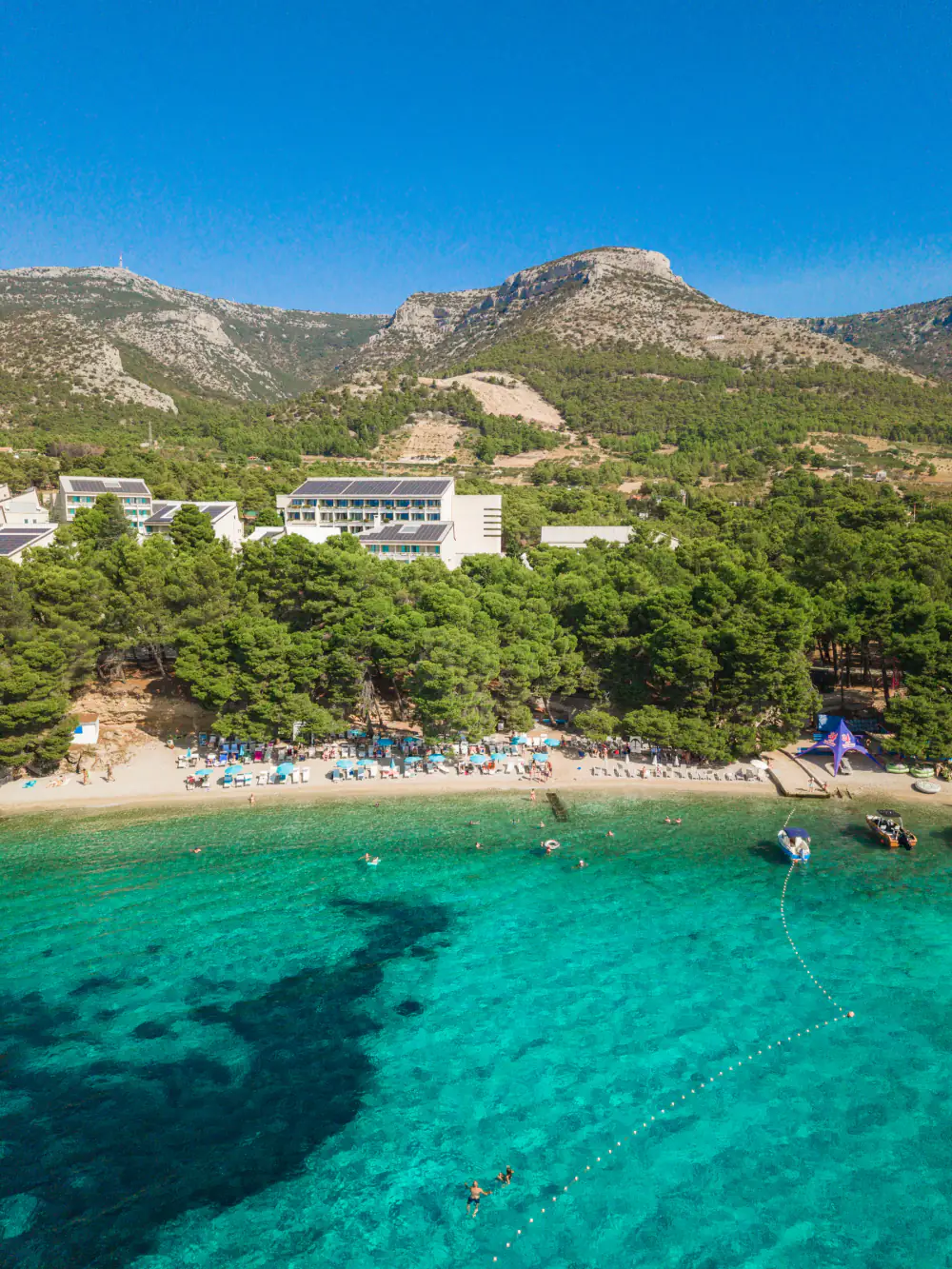
Zlatni Rat is the beach on every Croatia poster: a long tongue of fine pebbles that reaches from the pine forest of Bol far out into the turquoise water of the Hvar Channel, with the bare slopes of Vidova Gora rising behind it. It is the most famous beach in the country – and one of the few that genuinely looks the way it does in the photos.
This guide covers everything you need to plan your visit: how to get to Zlatni Rat from Split, how to get from Bol to the beach, what to expect once you are there, when to go to avoid the crowds, and what else to see around Bol. We bring guests here all summer, so the tips come from experience on and off the water.
Zlatni Rat at a glance
| Where | Bol, on the south coast of the island of Brač, Croatia |
|---|---|
| The beach | A pebble spit several hundred metres long, with pine forest behind |
| Water | Clear and turquoise, deepening quickly on both sides of the spit |
| Facilities | Sunbeds and umbrellas, beach bars, water sports, toilets |
| From Bol | About 2 km along the seafront promenade, or by taxi boat |
| From Split | About 1 hour by catamaran or private boat; longer by car ferry and road |
| Best time | June and September; mornings in July and August |
| Good to know | The afternoon wind makes it a windsurfing hotspot |
What makes Zlatni Rat special
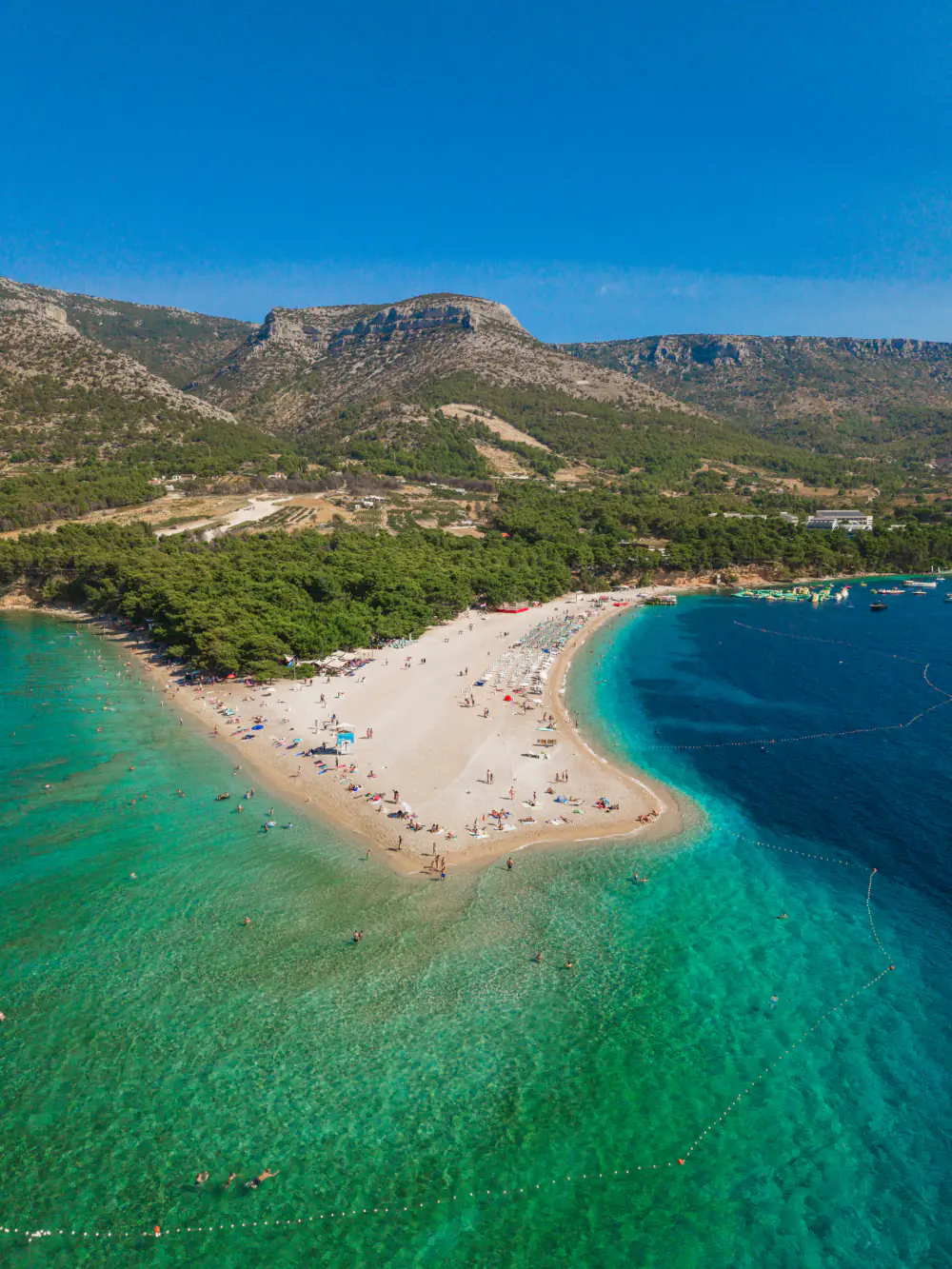
The name means "golden cape", and in English it is often called the Golden Horn. What makes it unique is its shape. The spit is made of fine pebbles carried by the sea, and its tip is not fixed: wind, waves and currents push it slowly from one side to the other, so it looks a little different from season to season – sometimes pointing straight out, sometimes curling east or west like a hook.
Behind the beach lies an old pine forest that gives welcome shade, and behind that rises Vidova Gora, at 778 metres the highest peak of all the Adriatic islands. The whole landscape around the beach is protected, which is one reason it has kept its natural shape despite its fame.
How to get to Zlatni Rat from Split
Bol is on the far side of Brač from Split, so the way you travel makes a big difference to how long you spend on the beach. There are four realistic options.
By catamaran from Split to Bol
In summer a fast passenger catamaran links Split's city harbour with Bol in about an hour. It is the quickest public option and drops you in Bol harbour, 2 kilometres from the beach. Timetables are limited outside the main season, so check the current schedule and book your return in advance in July and August.
By car ferry to Supetar and across the island
Car ferries run frequently from Split to Supetar on the north coast of Brač, a crossing of about 50 minutes. From Supetar it is roughly 40 kilometres – around 45 minutes – across the island to Bol, by car or by local bus. It is the most flexible option if you want a car on Brač, but count on a full travel morning.
From the Makarska Riviera
If you are staying on the mainland coast south of Split, a car ferry crosses from Makarska to Sumartin on the eastern tip of Brač, from where you drive west to Bol.
By private boat from Split
With a private boat you leave from Split's waterfront, pass through the Split Gate between Šolta and Brač and follow the island's south coast to Bol – about an hour in calm sea, with swim stops on the way. You anchor right off Zlatni Rat, swim ashore or take the tender, and leave whenever you like.
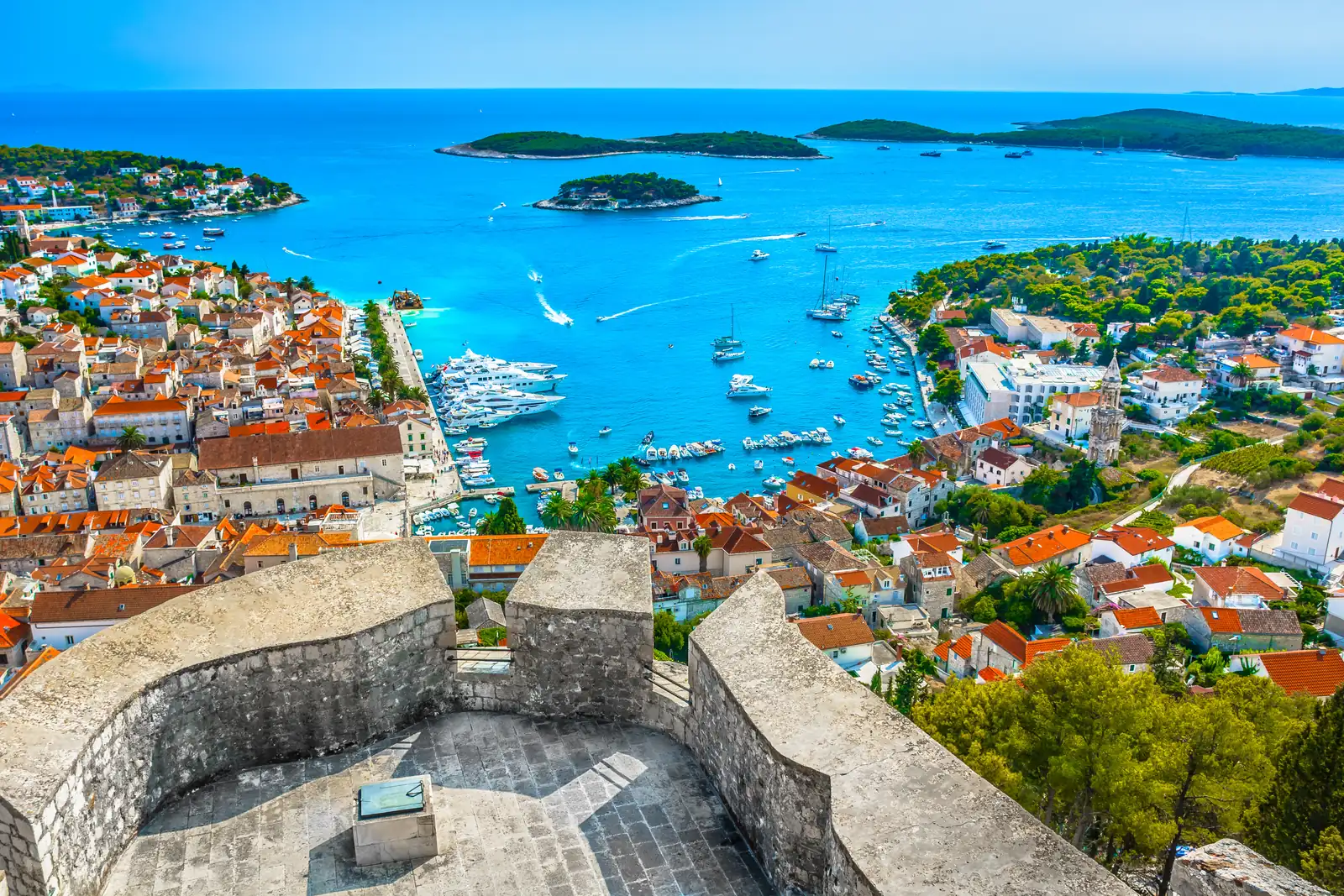
It turns a long chain of ferries, buses and walks into one relaxed trip: the beach, a lunch in Bol and a quiet cove on the way home, all in one day. You can also combine Zlatni Rat with Hvar, which lies just across the channel.
Getting from Bol to the beach
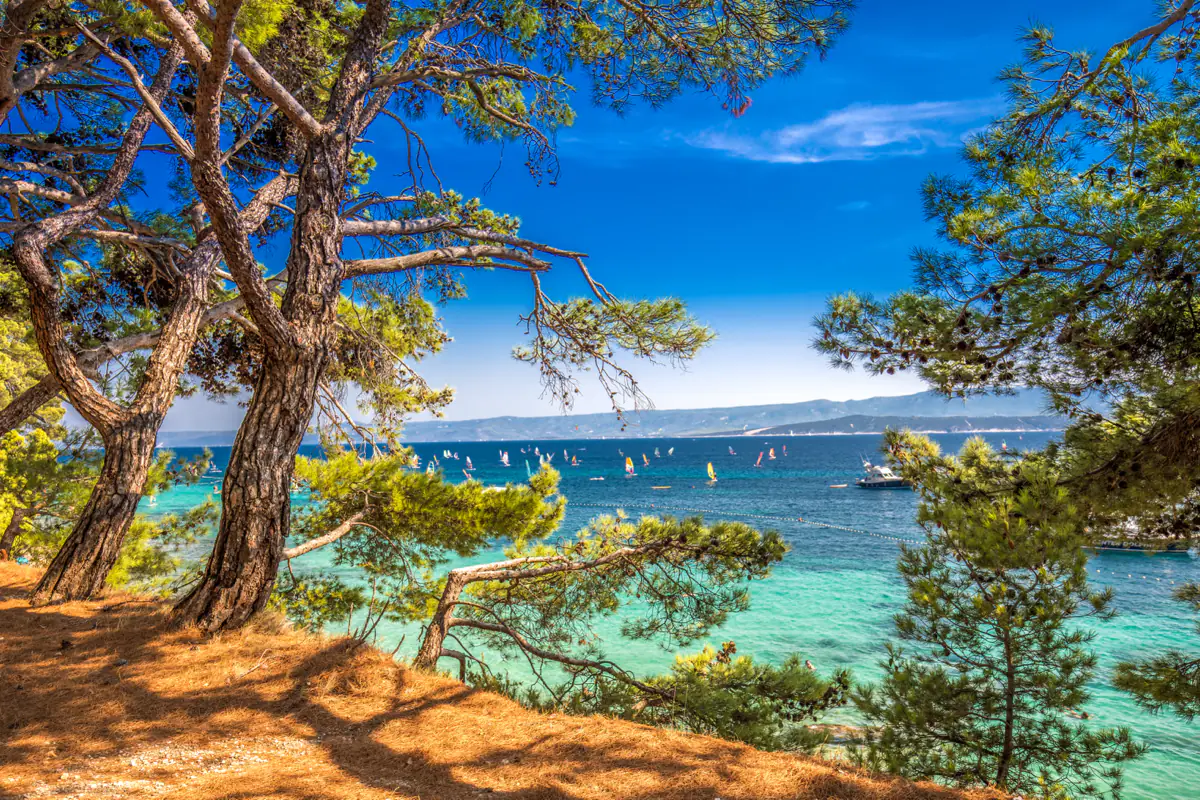
From Bol harbour, a shaded promenade runs west along the sea to Zlatni Rat. The walk takes about 20 to 30 minutes and is a pleasure in itself, past small beaches, pine trees and hotels. In summer, taxi boats also shuttle between the harbour and the beach.
If you come by car, there is a paid car park above the beach. It fills early on summer days, so either arrive before 10 am or leave the car in Bol and walk.
What to expect on the beach
Zlatni Rat is not a hidden cove – it is a proper, well-equipped beach, and on a summer afternoon a lively one. The surface is fine, rounded pebbles that are comfortable underfoot, and the water deepens fairly quickly on both sides of the spit, which makes it a real swimming beach.
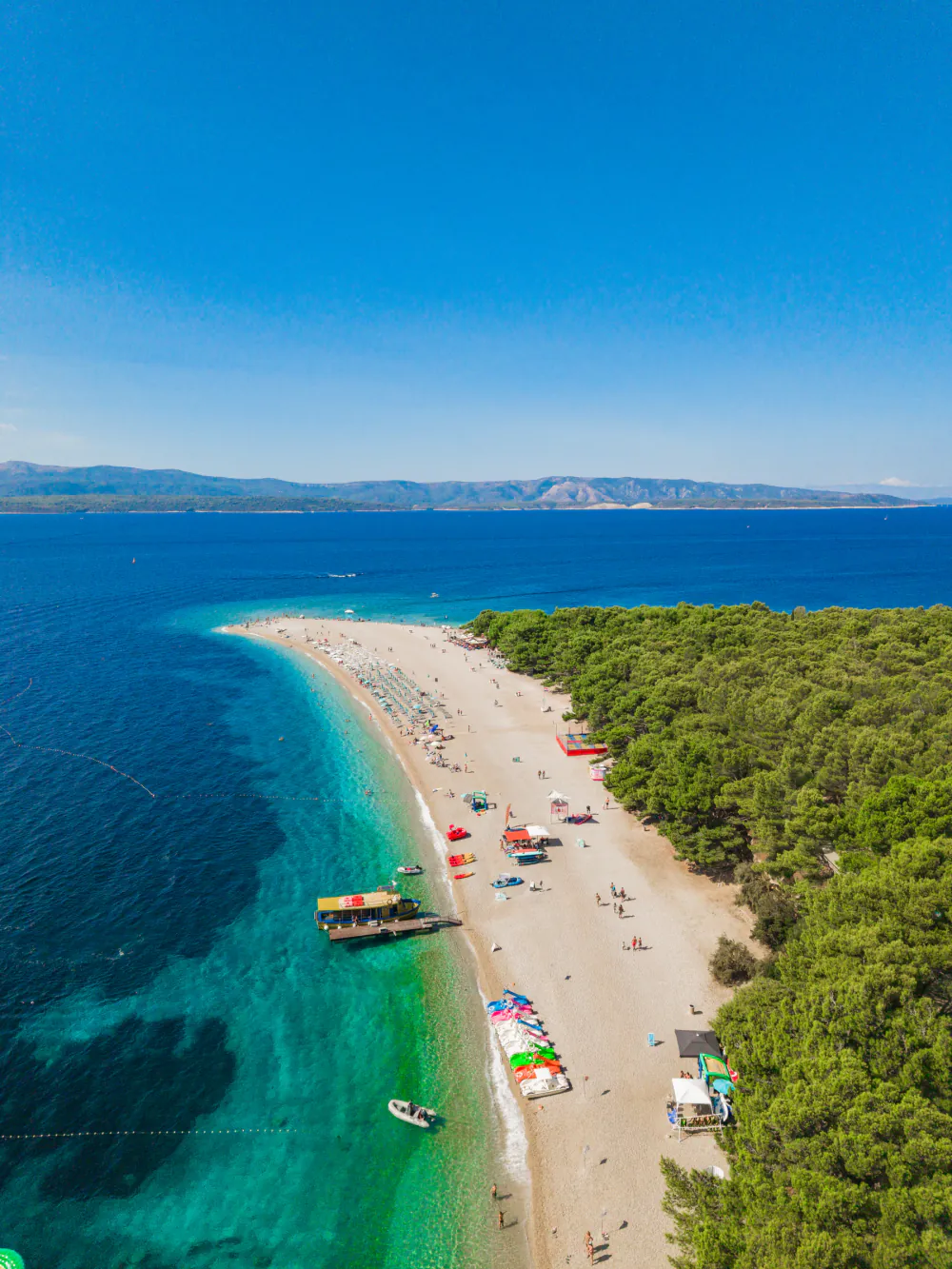
Sunbeds and umbrellas are available to rent along the beach; arrive early in high season for a front-row spot.
Beach bars and snacks sit along the edge of the pine forest.
Shade comes from the pines behind the beach – on the spit itself there is none.
Water sports range from paddle boards and kayaks to jet skis and parasailing.
Families will find an inflatable water park anchored off the beach in summer.
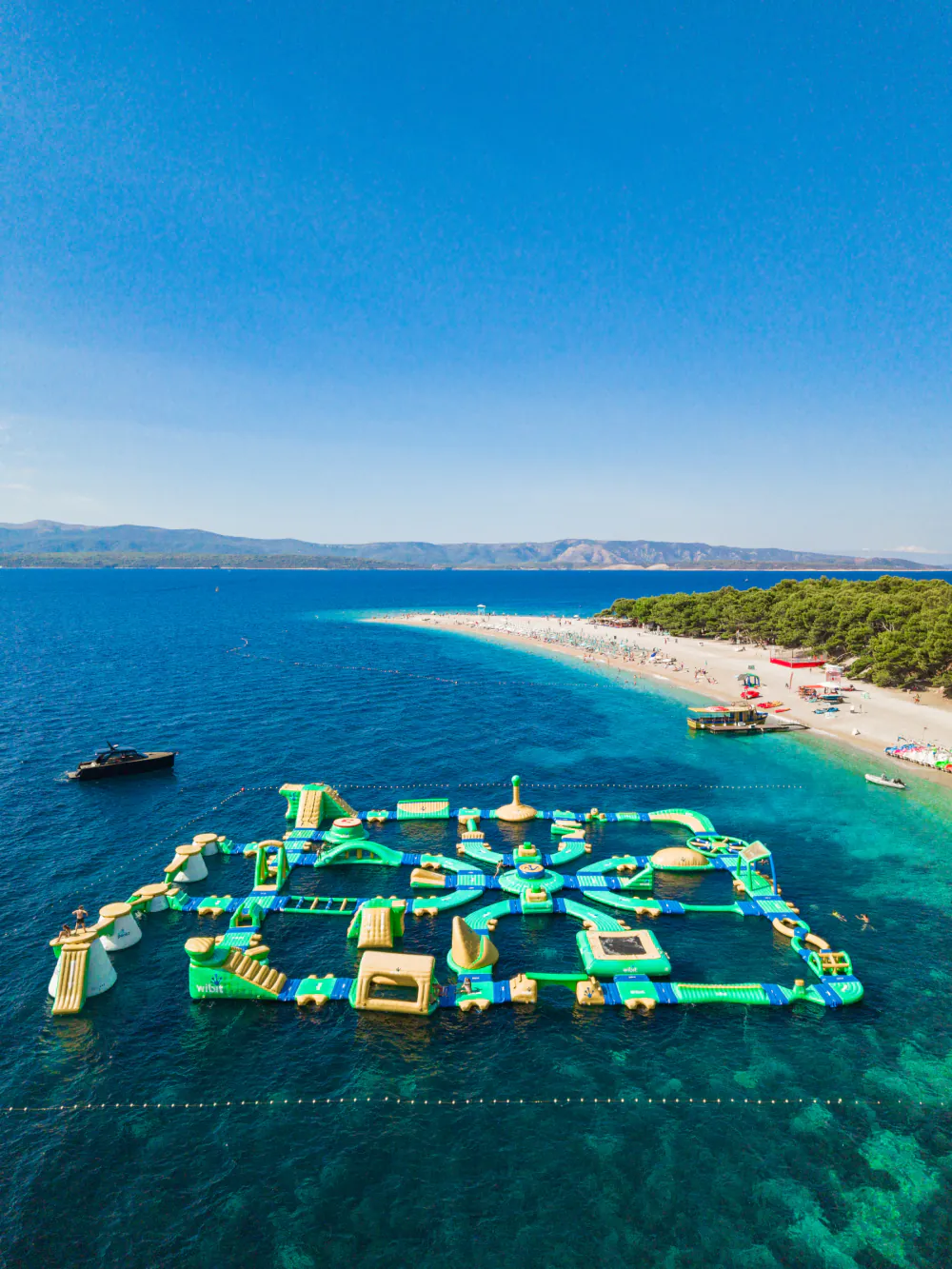
The famous shape is best seen from above. If you want the classic view, walk or drive up towards Vidova Gora, or see it from the water as you arrive by boat.
Windsurfing and kitesurfing in Bol
The channel between Brač and Hvar works like a wind tunnel. On many summer days a steady westerly, the maestral, picks up from late morning and blows through the afternoon, which has made Bol the best-known windsurfing spot in Croatia. Several schools near Zlatni Rat rent equipment and run courses for beginners.
For swimmers this has a practical side: mornings are usually calm and glassy, while the afternoon brings waves to the exposed side of the spit. The other side often stays calmer, so move around the tip if it gets choppy.
When is the best time to visit Zlatni Rat?
June and September are ideal: the sea is warm, the beach bars are open and there is room to spread out. July and August are the busiest months – arrive before 10 am, or come in the late afternoon when the day visitors leave and the light turns golden. May and October can be lovely and quiet, but the water is cooler and some services are closed.
Beyond Zlatni Rat: Bol and the coast around it
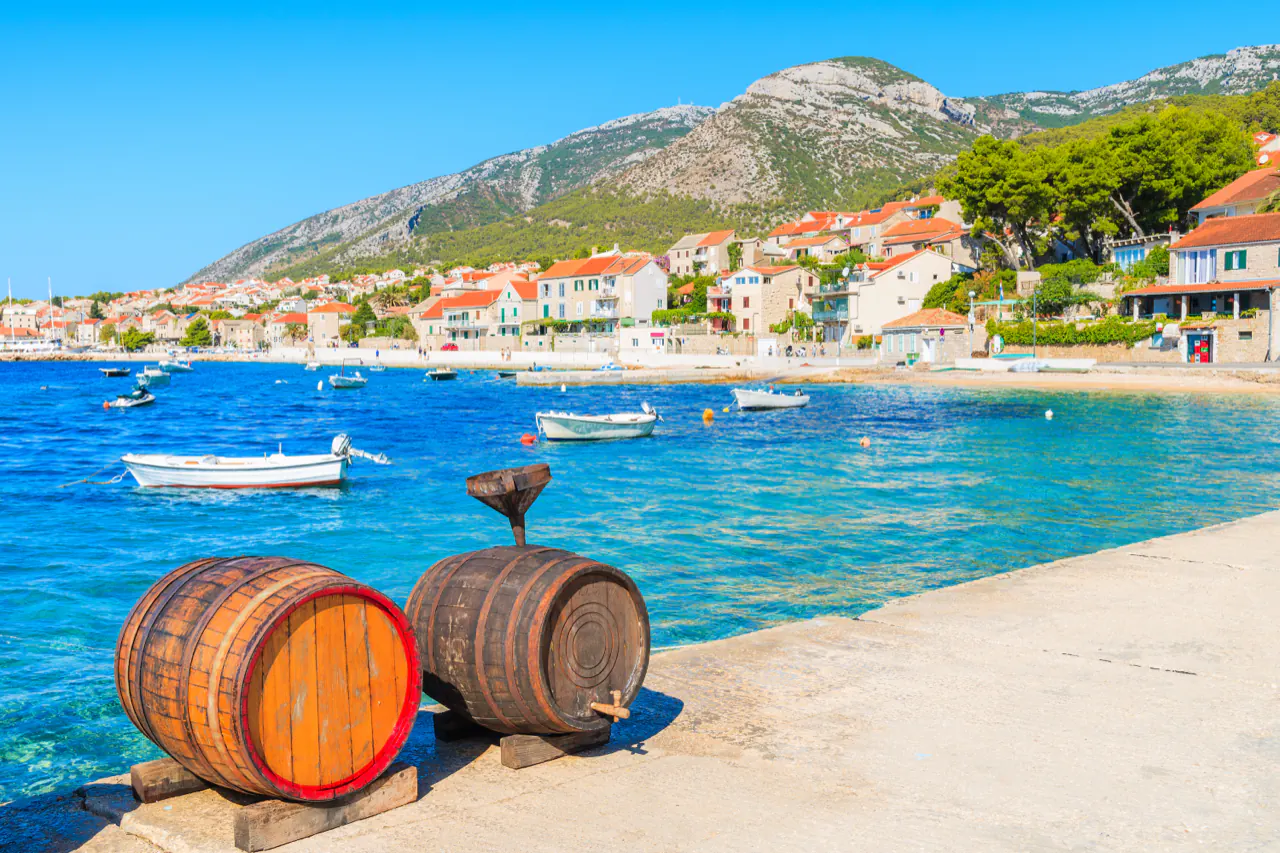
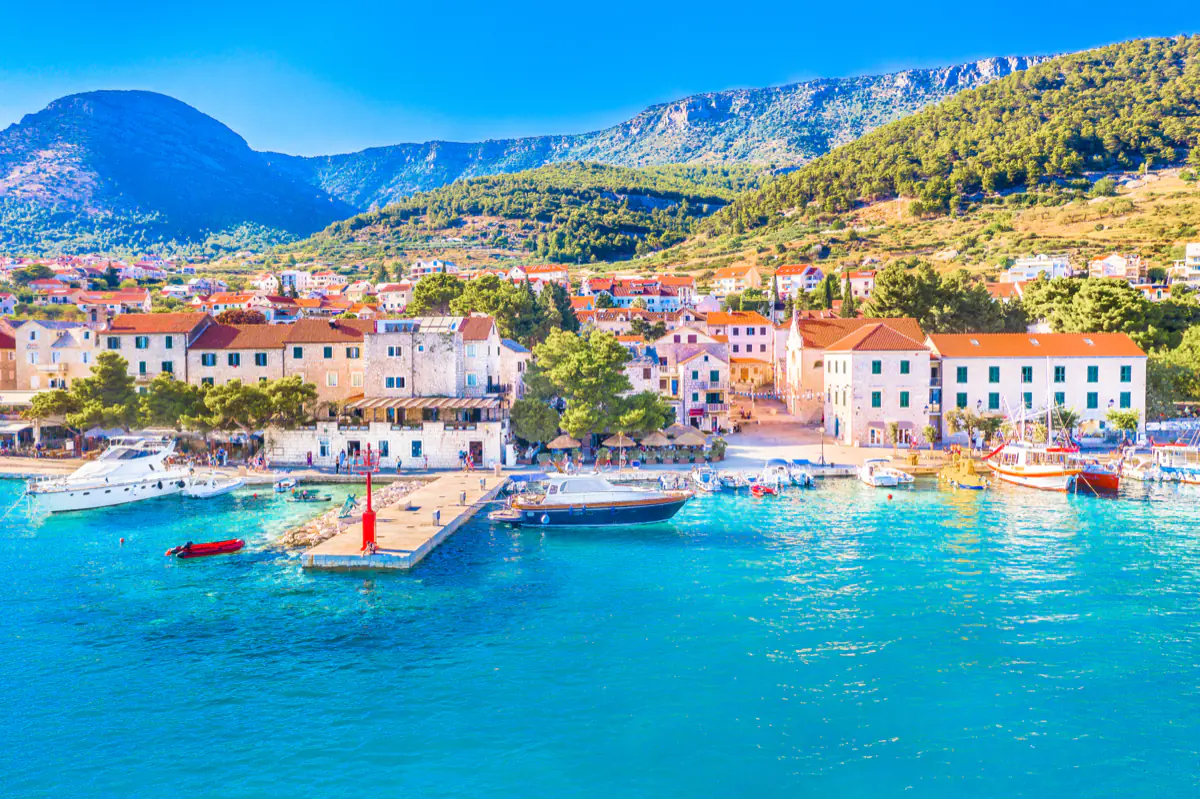
Bol itself is one of the prettiest small towns on the Dalmatian islands: a harbour of stone houses, cafés and fishing boats below the mountain. It is worth an hour before or after the beach, and it has plenty of restaurants for lunch.
The Dominican monastery stands on a small headland at the eastern end of Bol, with a church, a museum and Martinica beach below its walls.
Borak is the beach between Bol and Zlatni Rat, quieter than the spit and lined with pines.
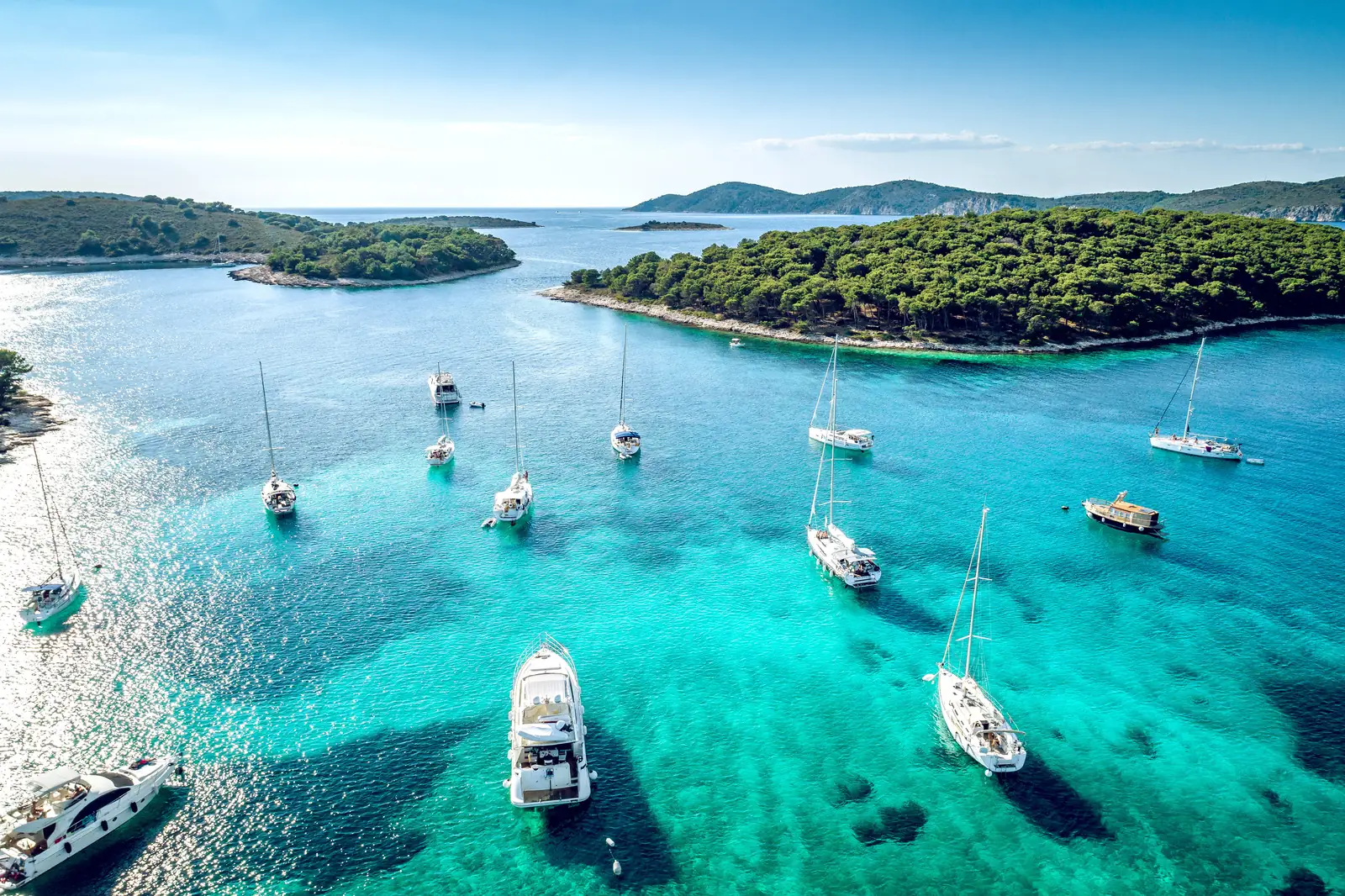
The wild beaches west of Zlatni Rat are smaller pebble coves with fewer people – easiest to reach by boat.
Vidova Gora can be climbed on foot from Bol in a few hours or reached by car, for the best view of Zlatni Rat and the islands.
Blaca Hermitage, a monastery built into the cliffs by monks in the 16th century, lies in a remote valley west of Bol and is reached on foot.
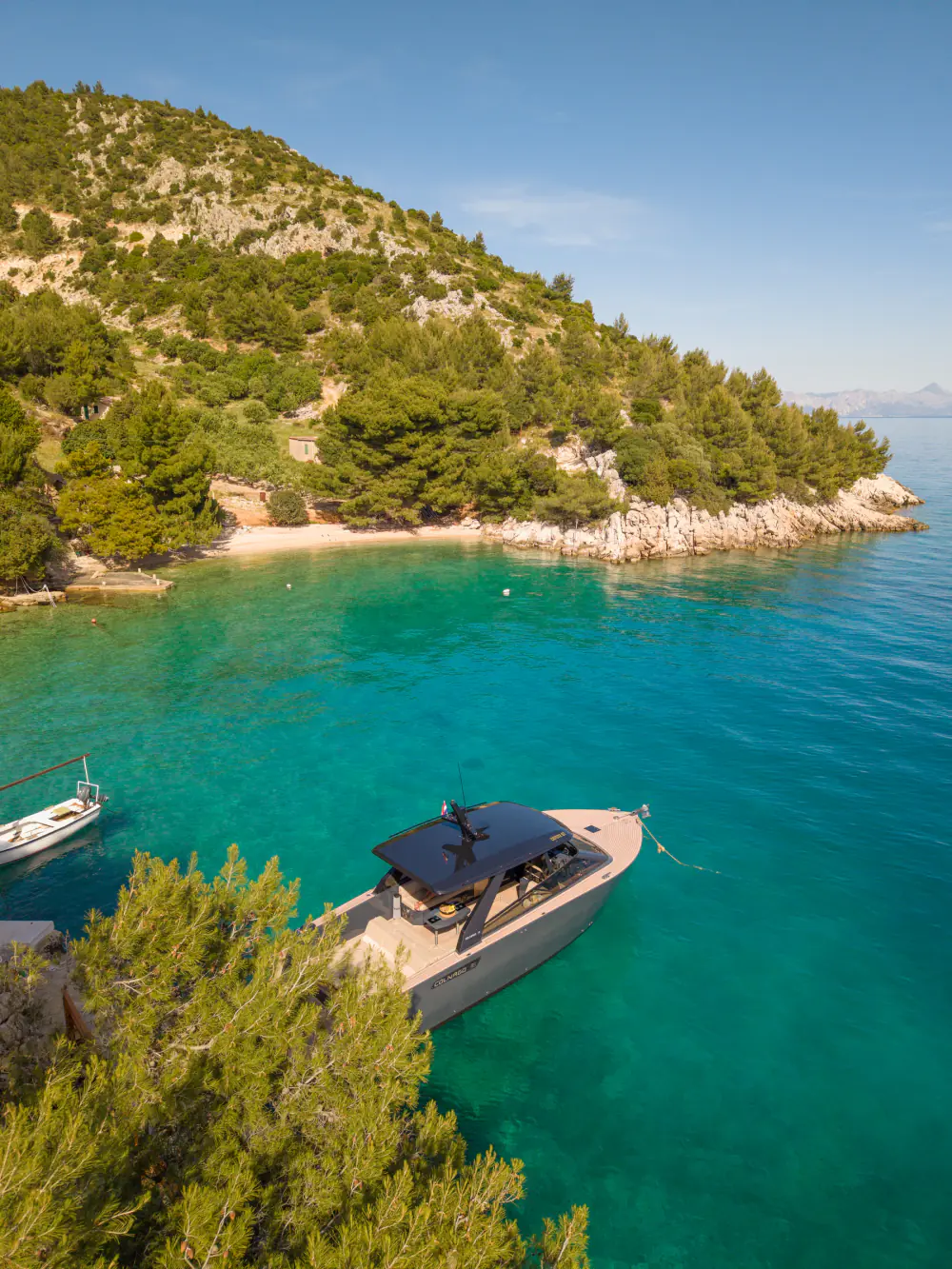
If you have a whole day, the coast west of Bol is where Brač shows its wilder side: steep slopes, terraced hills and small coves with no road at all.
On a private charter we often combine Zlatni Rat in the morning with one of these coves at lunchtime – a quiet anchorage, a swim straight off the stern and nobody else around.
Zlatni Rat by private boat: how we do it
Arriving by boat is the most beautiful way to see Zlatni Rat. You see the whole spit from the sea as you approach, with Vidova Gora behind it – a view you never get from the beach. Your skipper anchors on the calmer side, depending on the wind, and you choose: swim ashore and spend an hour on the beach, or stay on board and enjoy the view with a drink.
From there the day is yours. Some guests continue to Bol for lunch; others cross to Hvar and the Pakleni Islands, or head back along the south coast of Brač with stops in coves like Smrka and Stipanska, which we describe in our guide to the most beautiful bays near Split.
Tips for your visit to Zlatni Rat
Start early. Before 10 am the beach is calm and quiet, and the light is beautiful.
Bring water shoes if you have sensitive feet – the pebbles are fine, but hot by midday.
Rent shade or claim a spot under the pines; the spit itself has none.
Watch the wind. If the afternoon breeze picks up, swim on the sheltered side.
Do not miss Bol. A coffee in the harbour or lunch in the old town is part of the experience.
Plan your return. Public catamarans back to Split are limited; book ahead in high season.
Frequently asked questions
Where is Zlatni Rat beach?
On the south coast of the island of Brač, about 2 kilometres west of the town of Bol, in central Dalmatia, Croatia.
How do you get to Zlatni Rat from Split?
By passenger catamaran from Split to Bol in about an hour, then a 20–30 minute walk; by car ferry to Supetar and a 45-minute drive across the island; or directly by private boat in about an hour, anchoring off the beach.
Is Zlatni Rat sand or pebbles?
Fine, rounded pebbles. It is comfortable to walk on, but it is not a sandy beach.
Is Zlatni Rat worth visiting?
Yes. It is one of the most beautiful beaches in Croatia, with clear water, pine shade and a unique shape. In high summer it is busy, so go early or arrive by boat to see it at its best.
Why does the shape of Zlatni Rat change?
The spit is made of loose pebbles. Wind, waves and currents move them, so the tip slowly shifts from one side to the other over time.
Can you do Zlatni Rat as a day trip from Split?
Yes. By catamaran it is an easy day trip in summer; by private boat you can add swim stops, lunch in Bol or a visit to Hvar on the same day.
Is Zlatni Rat good for children?
Yes, with care: the water gets deep quickly, but the pebbles are fine, there is shade under the pines, and the water park and snack bars keep children happy.
Plan your Zlatni Rat day
Whether you want a lazy beach day, a combination with Hvar or a tour of Brač's hidden coves, we will plan the route around the weather and your group. Tell us your date and how many you are.
You can also explore boat charter on Brač, read about a day trip to Hvar from Split, or browse our boats.