Things to do in Hvar: 16 best experiences on the island and at sea
The best things to do on Hvar, from St Stephen's Square and the Spanish Fortress to the Pakleni Islands, Stari Grad, Jelsa, wine, lavender and the quiet coves you can only reach by boat.
By Bokun Charter
11 min read
Hvar is often described as Croatia's party island, but that is only a small part of the story. Away from the bars of Hvar Town, the island has Renaissance squares and a Venetian fortress, the oldest town in Croatia, lavender fields, steep south-facing vineyards, quiet fishing harbours on the north coast – and some of the clearest water in the Adriatic, in coves you can only reach by boat.
This guide brings together the best things to do on Hvar, on land and at sea, from the classics in Hvar Town to the places most visitors never see. We spend our summers on and around the island with our guests, so every tip comes from the water, not from a desk.
Things to do in Hvar at a glance
| Experience | Where | Best for |
|---|---|---|
| St Stephen's Square and the old town | Hvar Town | History, cafés, evening strolls |
| The Spanish Fortress | Above Hvar Town | The best view on the island |
| The Pakleni Islands | Opposite Hvar Town | Swimming, lunch in Palmižana |
| The Red Rocks and the south coast | East of Hvar Town | Cliffs, coves and snorkelling by boat |
| Stari Grad and its UNESCO plain | North coast | Ancient history, a calmer base |
| Jelsa and Vrboska | North coast | Harbour towns, families |
| Wine and lavender | Inland and south slopes | Tastings, early summer colours |
| Vis, the Blue Cave and Zlatni Rat | Day trips from Hvar | The big days at sea |
1. Explore Hvar Town and St Stephen's Square
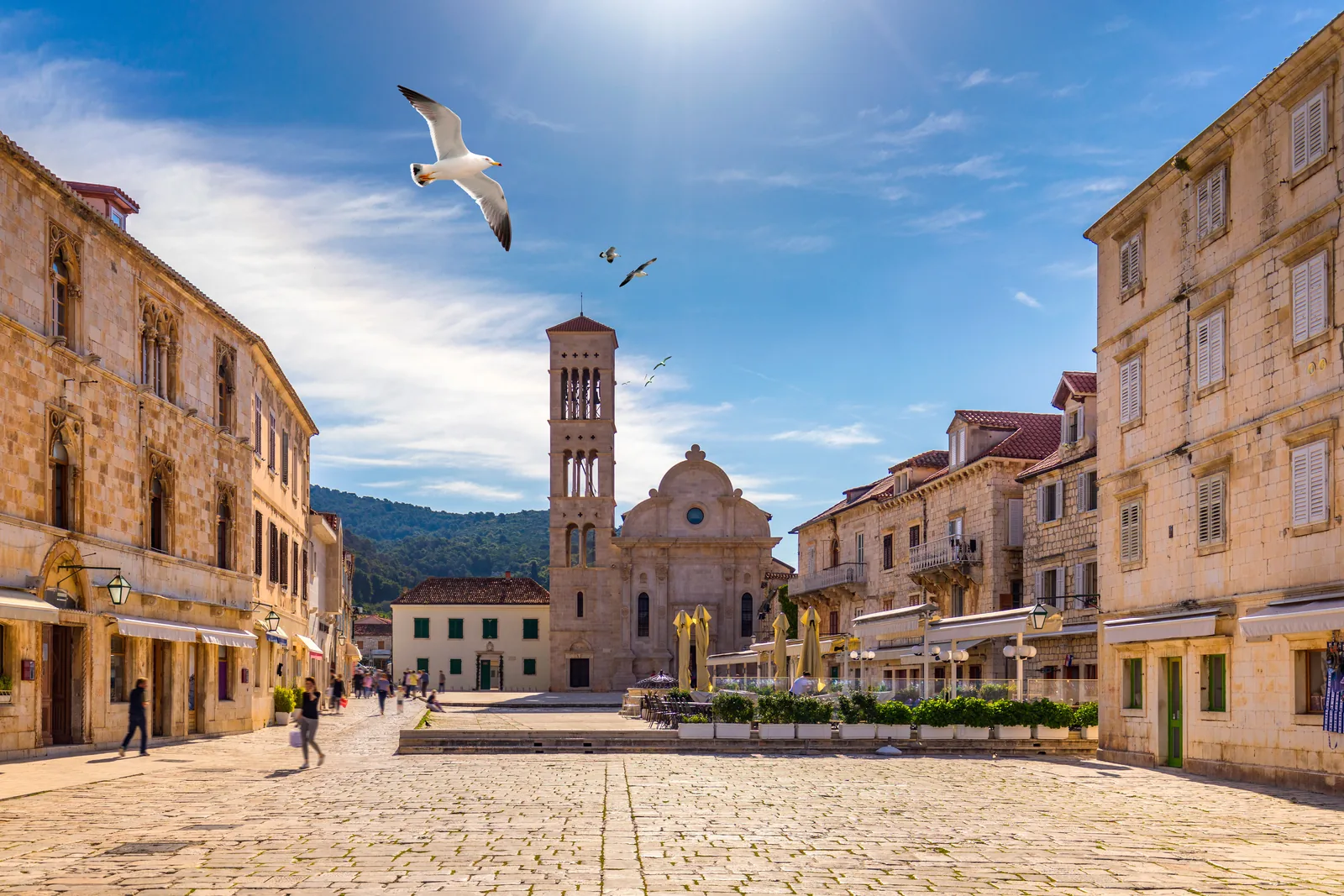
Every visit starts on St Stephen's Square in Hvar's old town, one of the largest squares in Dalmatia, paved in polished white stone and framed by the cathedral at one end and the harbour at the other. On its south side stands the Arsenal, built to shelter Venetian galleys; on its upper floor is a theatre from 1612, one of the oldest public theatres in Europe.
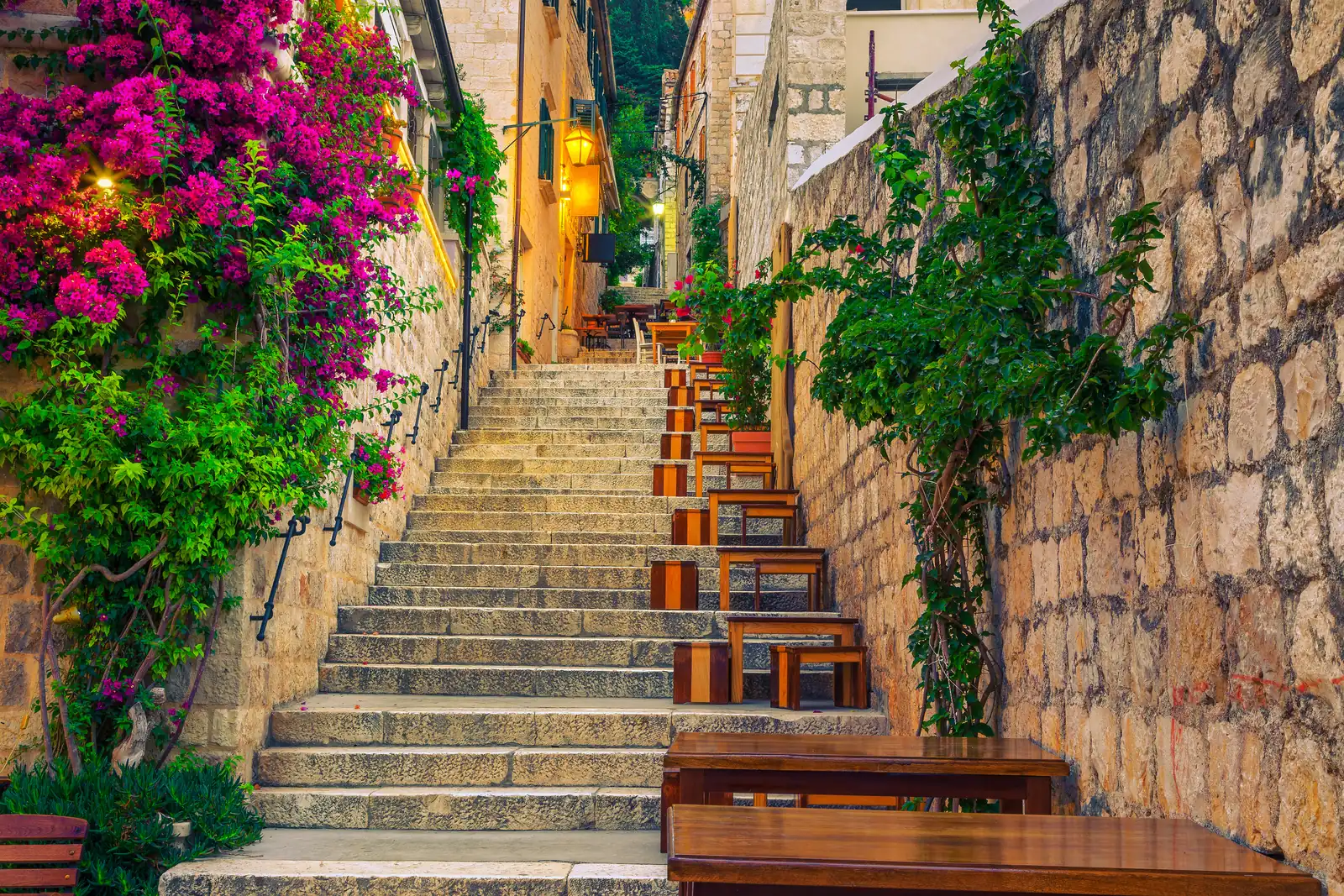
Behind the square, steep lanes lead up between stone houses, small churches and courtyards full of bougainvillea. Go early in the morning, before the day-trippers arrive from Split, or in the evening, when the stone is warm and the cafés fill up. A ten-minute walk east along the waterfront brings you to the Franciscan monastery, with its cloister and a quiet pebble beach in front.
2. Climb to the Spanish Fortress
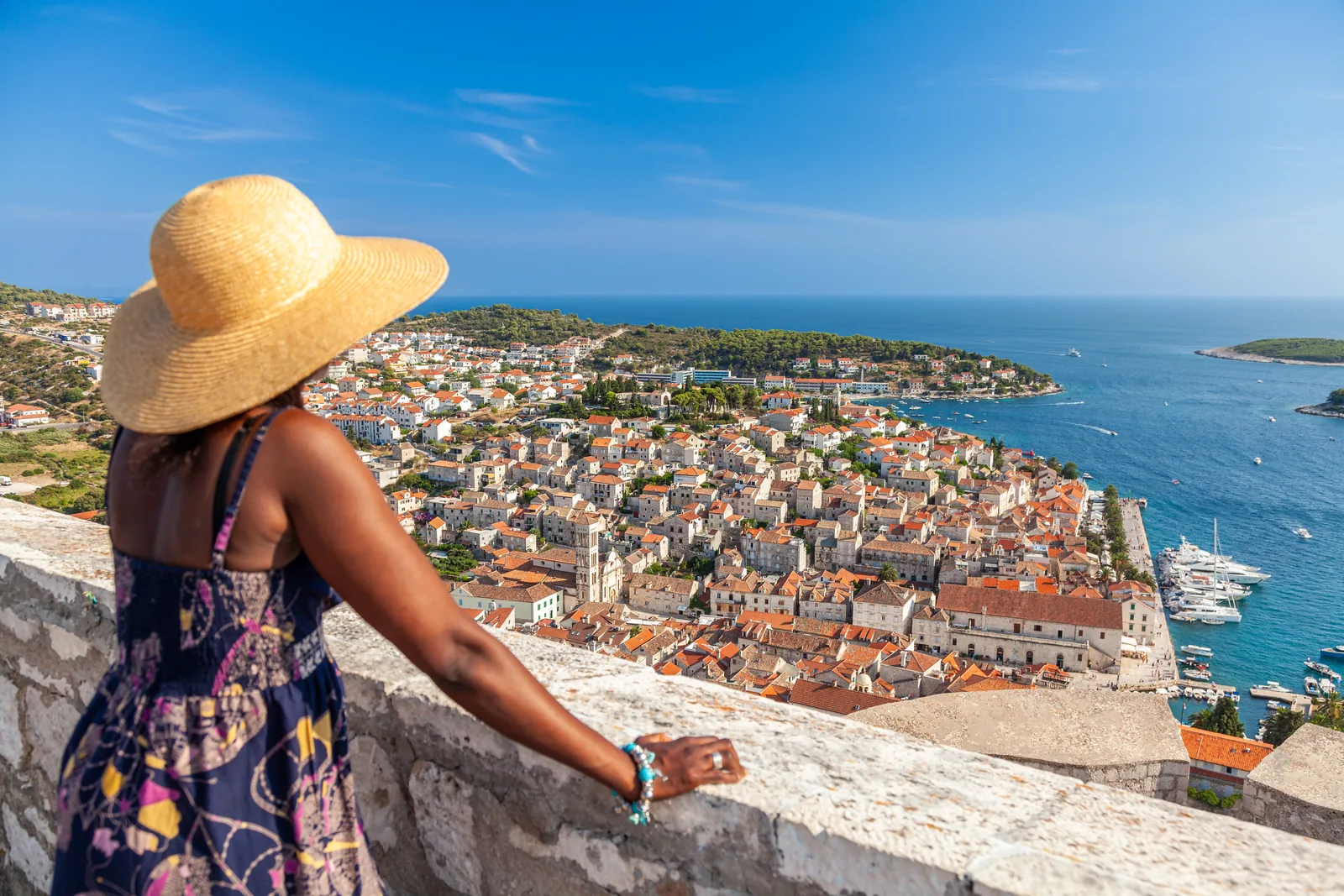
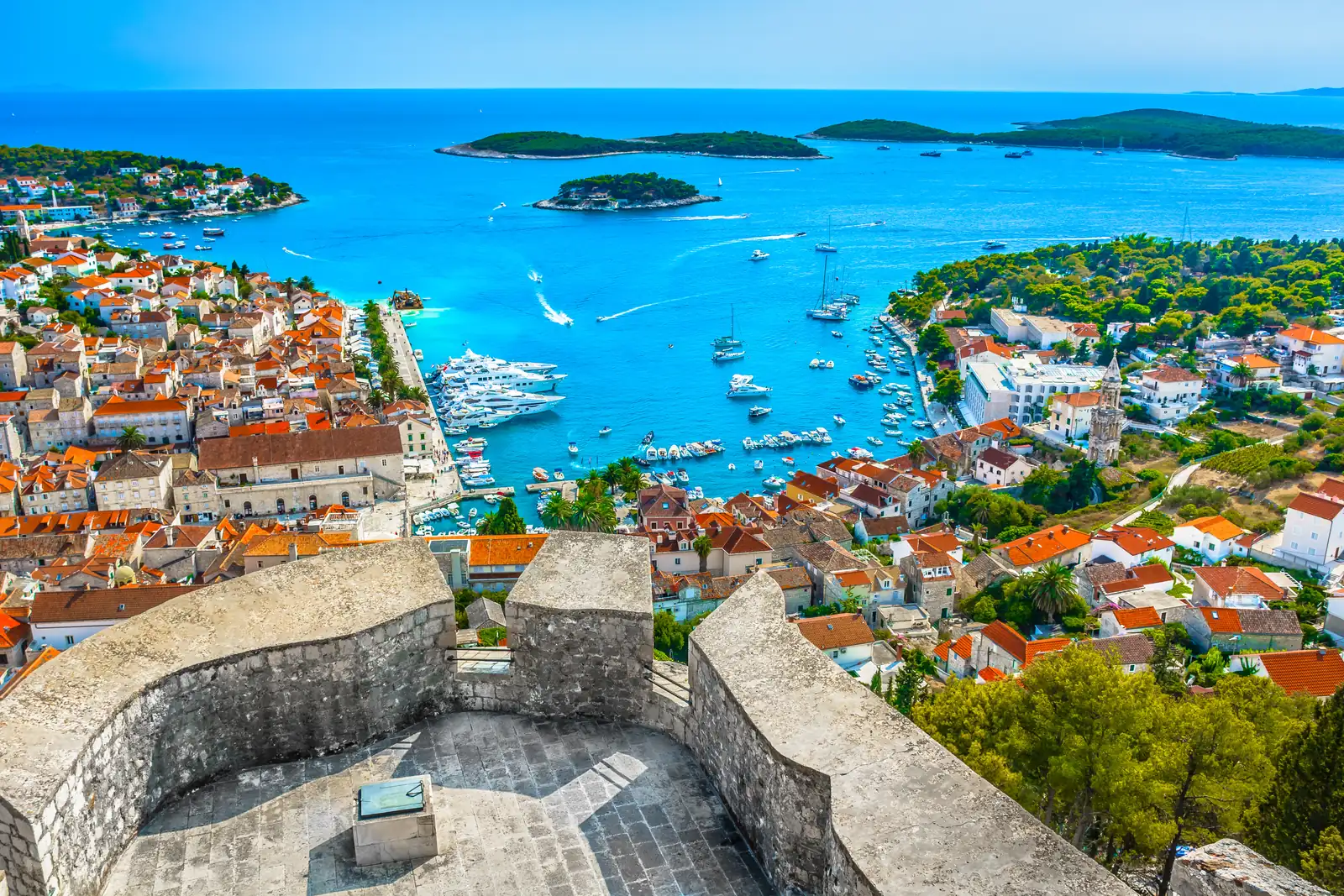
The Spanish Fortress, known locally as Fortica or Španjola, sits on the hill above Hvar Town. It was built in the 16th century under Venetian rule and owes its nickname to the Spanish engineers who helped design it. The walk up through the old town and a pine-shaded path takes around 20 minutes; there is a small entrance fee.
The reward is the best view on the island: the red roofs of Hvar Town, the harbour full of yachts and, beyond, the Pakleni Islands scattered across the sea. Come in the late afternoon for the softest light, or just before sunset.
3. Swim in the Pakleni Islands
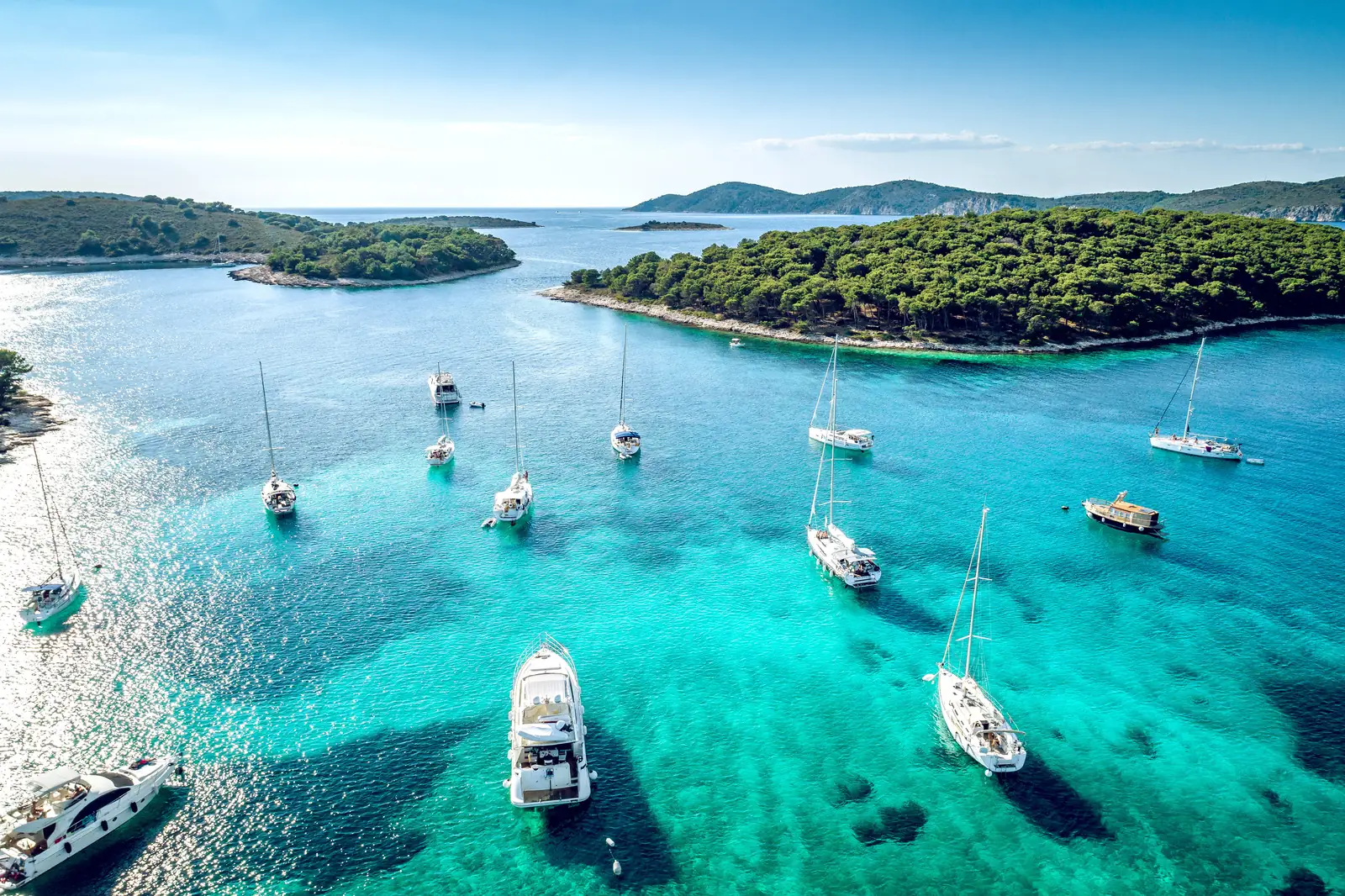
Directly opposite Hvar Town lies the Pakleni Islands, a chain of pine-covered islands with some of the most beautiful swimming spots in Croatia. Palmižana on Sveti Klement has a botanical garden and a handful of excellent restaurants; Jerolim and Stipanska have small beaches and beach bars; and countless coves in between are best reached by boat. Our Pakleni Islands guide covers every bay in detail.
Water taxis run from Hvar harbour to Palmižana and Jerolim all summer. With a private boat you skip the queues, swim in the coves the taxis never stop at, and choose your own lunch table – with fuel, drinks and snorkelling gear included on every Bokun charter.
4. See the Red Rocks from the sea
East of Hvar Town, the limestone cliffs of the south coast suddenly turn orange and rust red. The Red Rocks rise straight out of turquoise water and can only be seen from a boat – there is no beach and no road. On a calm morning, swimming beneath the columns and small sea caves is one of the most memorable moments on the island.
The Red Rocks are on the way to some of Hvar's finest bays, so most boat days along the south coast combine them with a swim and lunch further east.
5. Find a quiet beach on the south coast
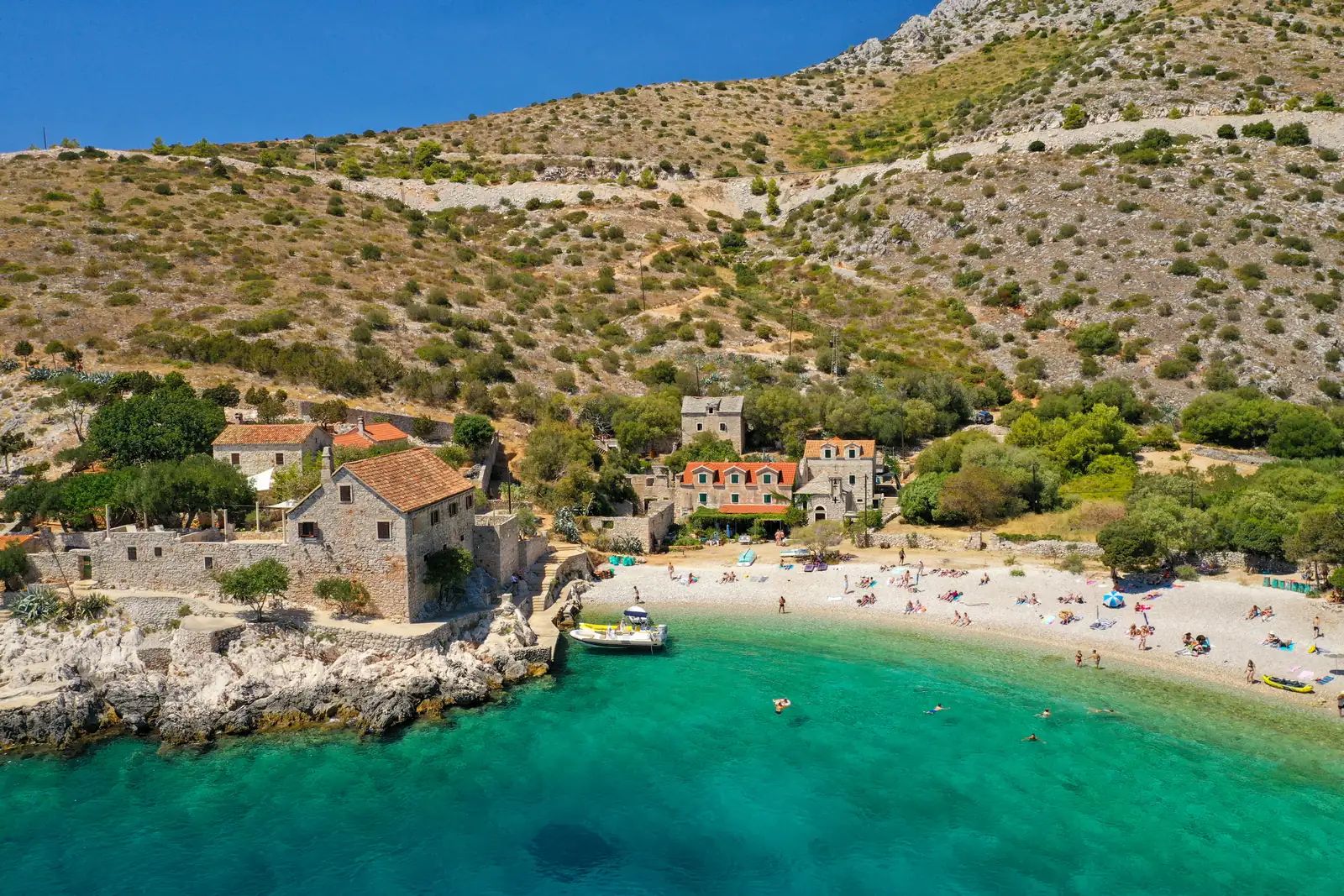
Hvar's south coast is a string of pebble coves below steep, pine-covered slopes. The most famous is Dubovica, a white pebble beach with an old stone house, reached by a footpath from the coast road or by boat. Further east, Zaraće, Milna and Pokonji Dol are lovely swimming spots, while the far south coast around Zavala and Sveta Nedjelja is quieter still.
Many of the best beaches have no road access at all. On a private boat you simply anchor in the cove, swim straight off the stern and move on when it gets busy.
6. Spend an afternoon at a beach club
Hvar's beach clubs are part of its reputation. Hula Hula, on the coast west of Hvar Town, is the classic place for a sundowner. In the Pakleni Islands, Carpe Diem Beach on Marinkovac and Laganini in Palmižana mix sunbeds, music and food in pine-shaded bays that are easiest to reach by boat.
The atmosphere changes through the day: relaxed lunches and swimming in the early afternoon, music and dancing towards sunset. Opening times and prices change every season, so check before you go – and if you arrive on your own boat, your skipper can drop you off and pick you up whenever you like.
7. Discover Stari Grad, the oldest town in Croatia
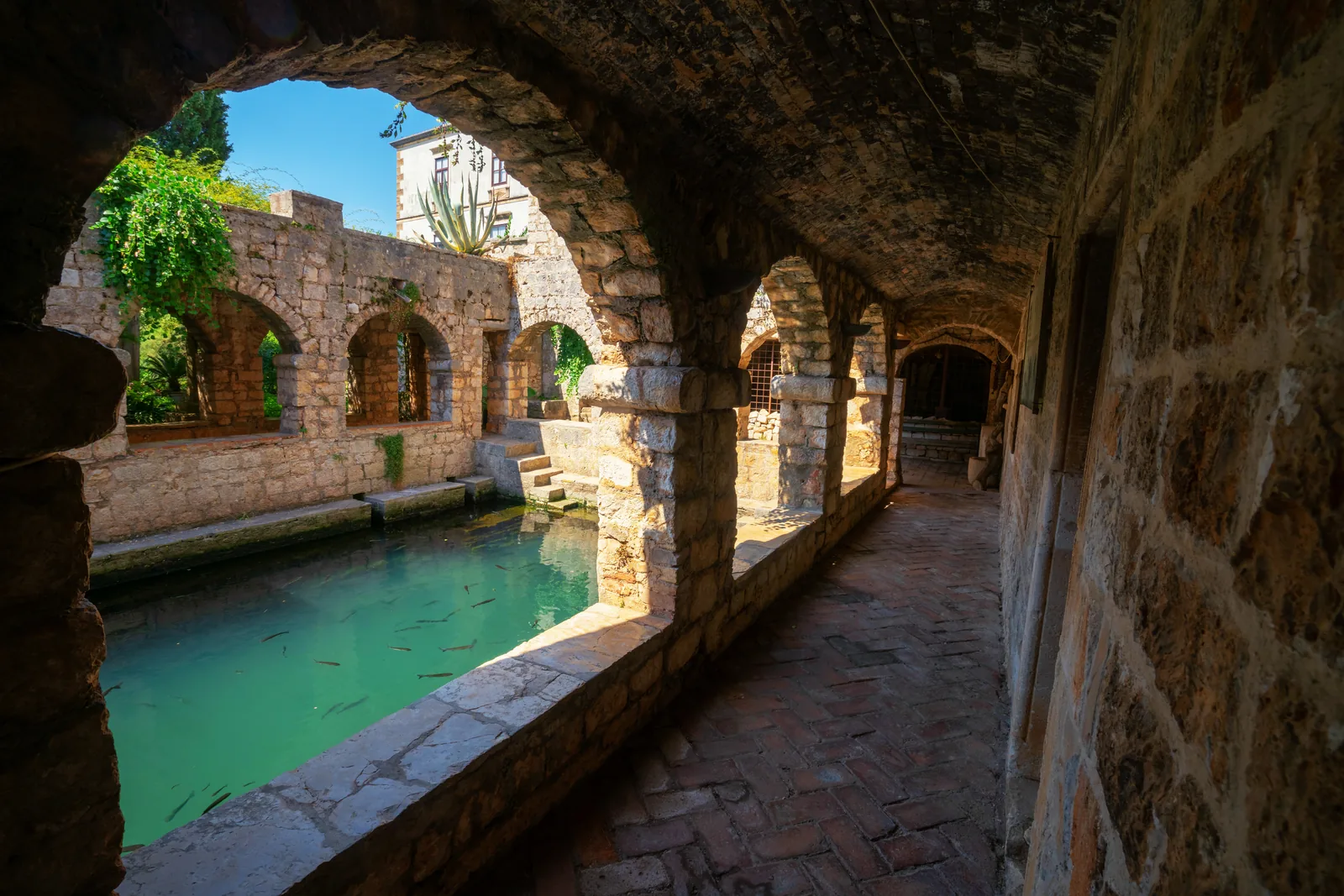
Stari Grad, on the north coast, was founded by Greek settlers in 384 BC as Pharos, and it is often called the oldest town in Croatia. Behind the town stretches the Stari Grad Plain, a UNESCO World Heritage Site where fields and dry-stone walls still follow the plots laid out by the ancient Greeks more than two thousand years ago.
In the town itself, don't miss Tvrdalj, the fortified Renaissance home of the poet Petar Hektorović, with its fishpond and arcades. Stari Grad is calmer than Hvar Town, with a long harbour lined with restaurants – and the main car ferry from Split arrives here.
8. Wander the harbours of Jelsa and Vrboska
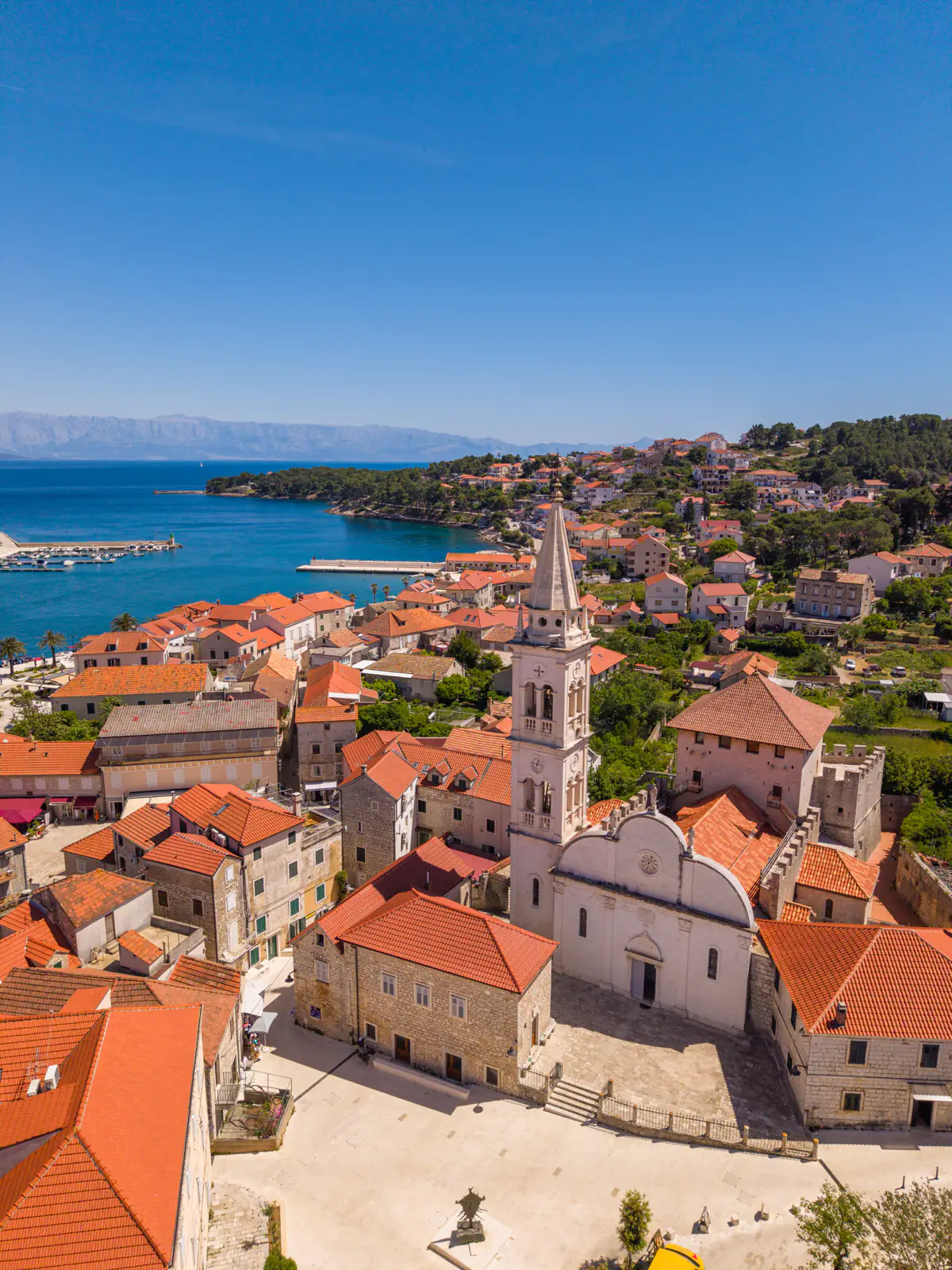
Further east along the north coast, Jelsa is a relaxed harbour town with a palm-lined waterfront, a pretty old town square and shallow pine-fringed beaches that are perfect for children. It is one of our favourite stops: arriving by sea, you moor right in front of the cafés.
A few minutes away, Vrboska sits on a narrow inlet crossed by small bridges, which has earned it the nickname "little Venice of Hvar". The two towns are linked by a coastal path, and both are good bases if you prefer a quieter stay than Hvar Town.
Jelsa in early summer, seen from our boat – the north coast of Hvar is at its best in the morning, before the wind picks up.
9. Taste Hvar wine
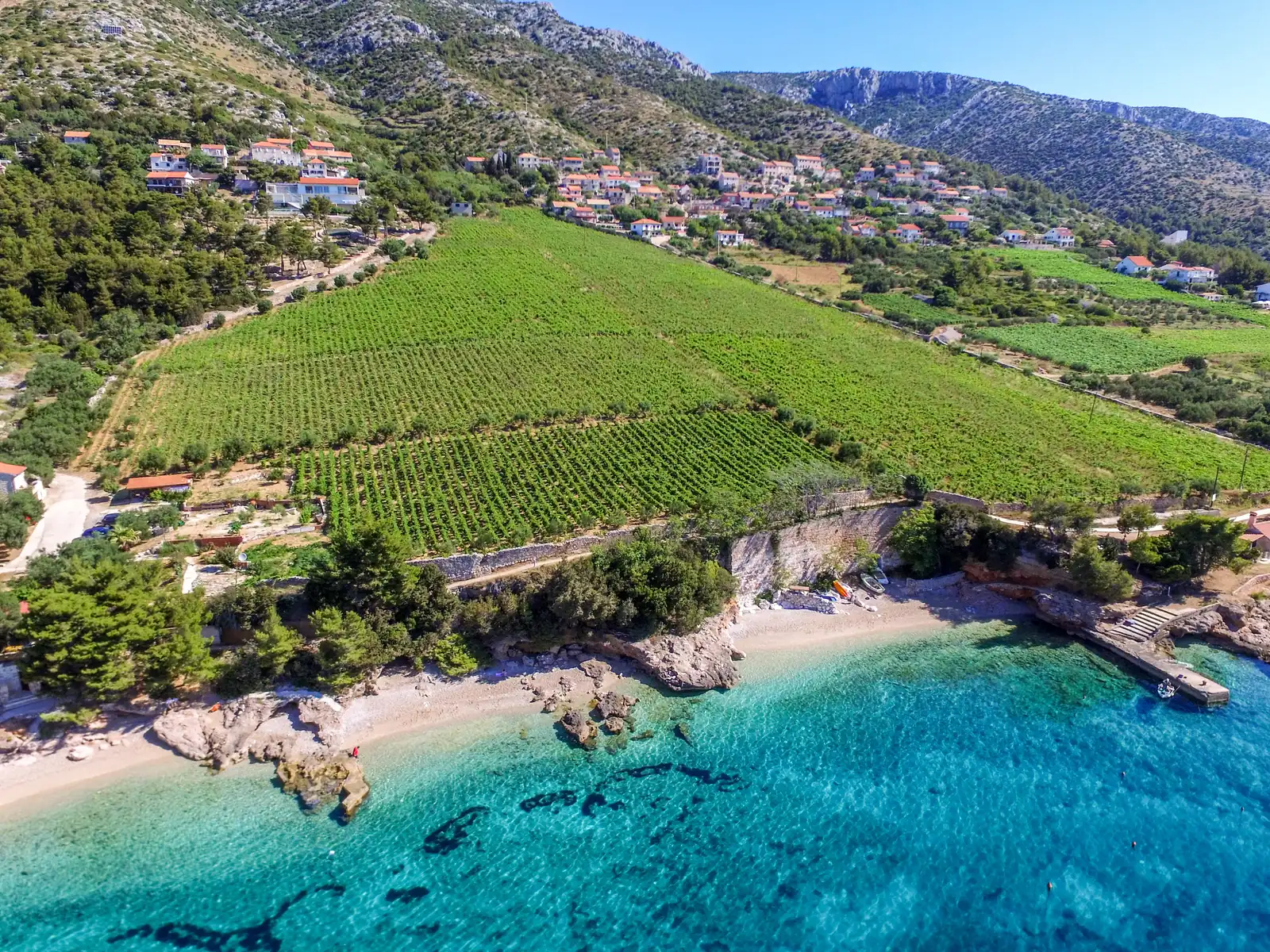
Hvar has made wine since the Greeks planted the first vines on the Stari Grad Plain. Today the island is known for Plavac Mali, a powerful red grown on the steep south-facing slopes between Ivan Dolac, Sveta Nedjelja and Zavala, where the vines grow almost down to the sea. Bogdanjuša, a fresh white grape native to Hvar, is worth trying too.
Many family wineries around Jelsa, Svirče and Sveta Nedjelja welcome visitors for tastings. Our Brač & Hvar wine tasting tour combines a winery visit with swimming bays – and nobody has to drive back.
10. Walk through the lavender fields
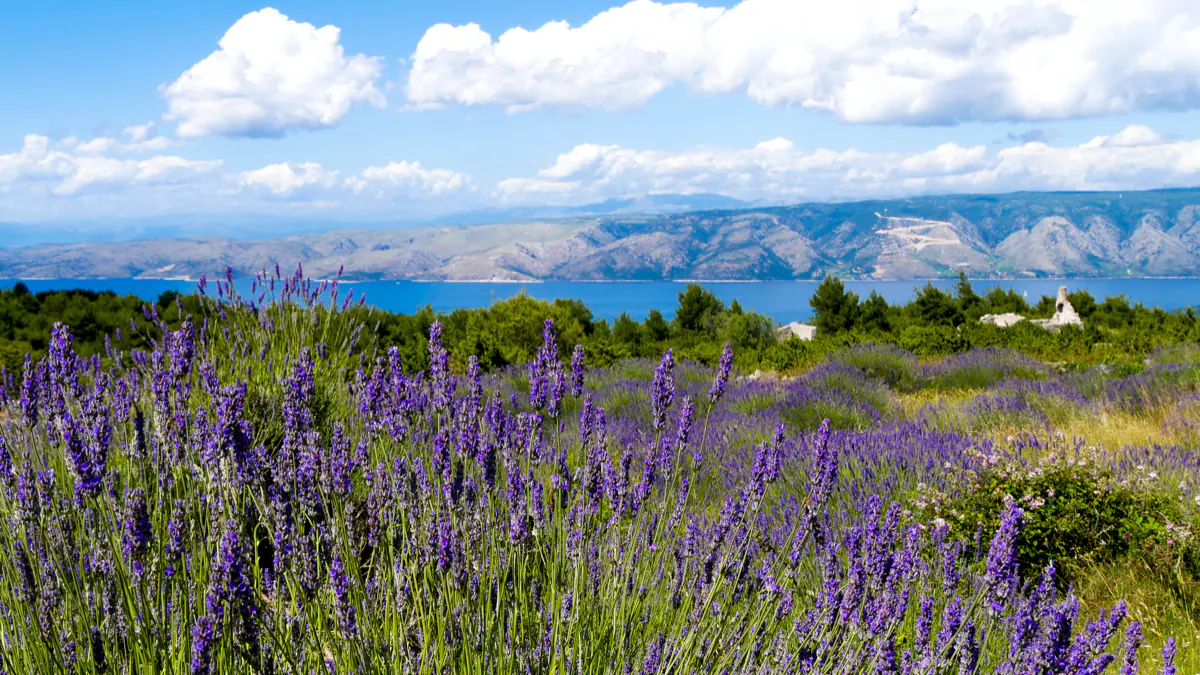
Hvar was once one of the largest lavender producers in Europe, and the scent still drifts over the hills in early summer. The fields bloom from late June to mid-July, especially around the villages of Velo Grablje and Brusje on the old road between Hvar Town and Stari Grad. Lavender oil, soaps and dried bunches are sold all over the island – a souvenir that actually comes from here.
11. Visit the abandoned village of Humac
High on the ridge east of Jelsa, Humac is a shepherds' village of stone houses that has been almost uninhabited for decades. Walking its silent lanes, with views over both sides of the island, feels like stepping back a century. In summer a rustic konoba serves food cooked under the iron bell, and the nearby Grapčeva Cave, where traces of Neolithic settlement were found, can be visited on guided tours.
12. Eat like a local in a konoba
Hvar's best food is simple: fish straight from the boat, grilled over wood, with island olive oil and a glass of local wine. Look out for gregada, a traditional fish stew with potatoes, for lamb or octopus slow-cooked under the peka, and for hvarska paprenjak, a peppery honey biscuit made on the island for centuries.
Some of the most memorable meals are in small konobas in bays that are easiest to reach by sea – on the Pakleni Islands, on the south coast and in the inlets of the north. Your skipper will know where to book.
13. Explore the quiet north coast by boat
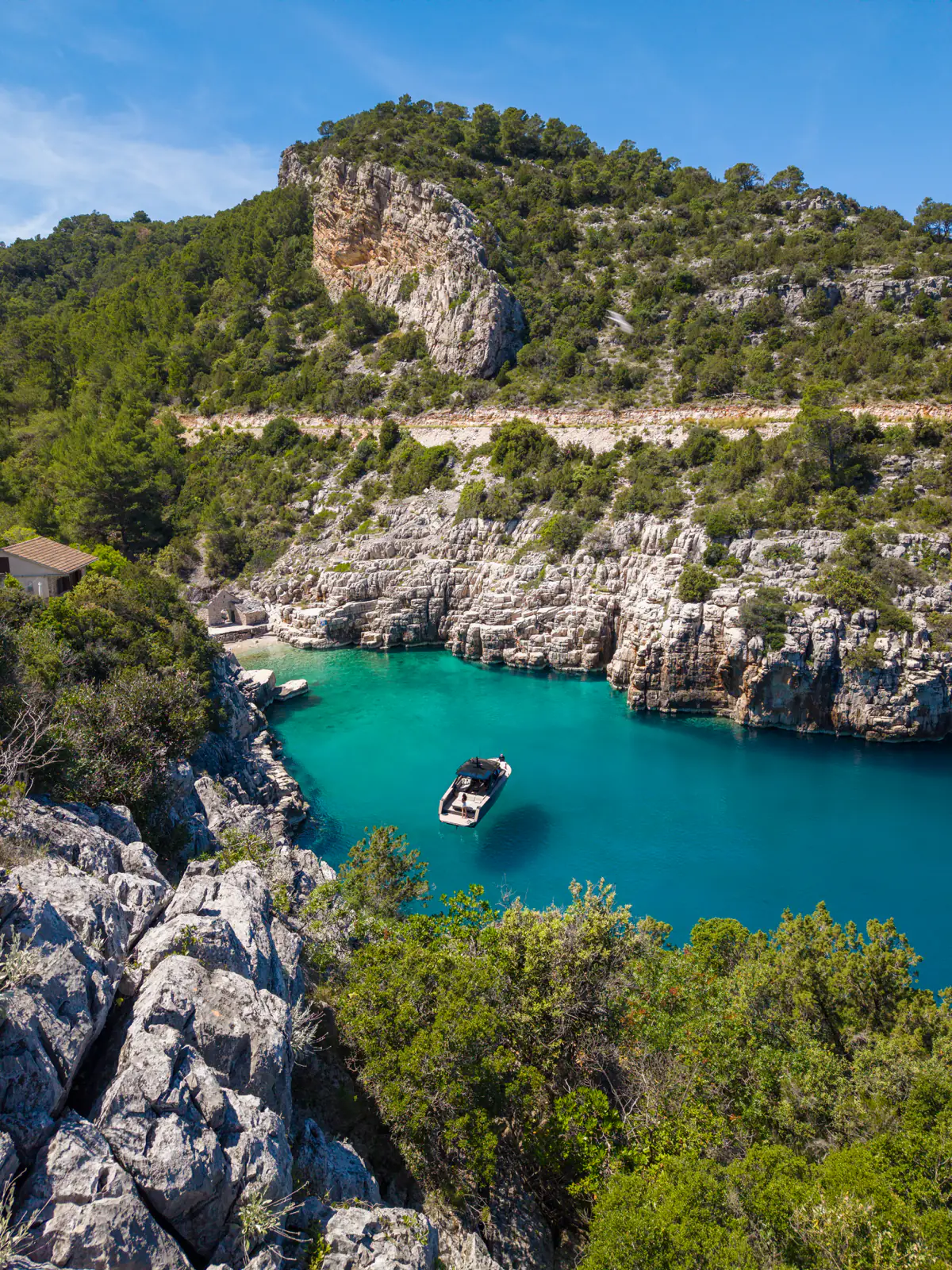
Between Stari Grad and Jelsa, the north coast is cut by deep, fjord-like inlets with turquoise water, pine forest and hardly any buildings. In high summer, when the bays around Hvar Town are full, these are the places where you can still have a cove to yourself – which is exactly where our skippers like to drop anchor.
A private boat is by far the best way to explore this side of the island, combining a swim in a quiet inlet with lunch in Jelsa or Vrboska and an afternoon on the south coast.
Every Bokun charter includes a professional local skipper and a hostess, fuel for the whole route, drinks, snacks, towels, snorkelling gear and paddle boards. We start from Hvar as well as from Split, Brač and other harbours along the coast.
14. Watch the sunset over the Pakleni Islands
Sunsets on Hvar are spectacular because the sun drops behind the Pakleni Islands and, on clear evenings, the distant silhouette of Vis. The fortress and the beach bars west of Hvar Town are the classic viewpoints. Even better is to watch from the water: anchored off the Pakleni Islands with a glass of wine, then back to the harbour as the lights of Hvar Town come on.
15. Take a day trip to Vis and the Blue Cave
From Hvar, the island of Vis is about an hour away by motor yacht. A day around Vis is one of the great days at sea in Croatia: the glowing Blue Cave on Biševo, a swim in the Green Cave on Ravnik, the hidden cove of Stiniva and lunch in the fishing town of Komiža. Our Blue Cave & Vis tour follows exactly this route.
16. Cross to Bol and Zlatni Rat
Across the channel from Hvar, the town of Bol on Brač is home to Zlatni Rat, the long pebble spit that is Croatia's most photographed beach. By boat it is well under an hour from the north coast of Hvar, which makes it an easy addition to a day of swimming – our Brač & Zlatni Rat tour has the details.
How many days do you need on Hvar?
Two or three days are ideal for a first visit: one for Hvar Town and the fortress, one at sea in the Pakleni Islands and along the south coast, and one for Stari Grad, Jelsa or a wine tasting. With a week you can add Vis, Brač and the quieter corners of the island.
If you are based in Split, a day trip works well too. The catamaran takes about an hour, and a private boat lets you see Hvar Town, the Pakleni Islands and the Red Rocks in one day – read our guide to getting from Split to Hvar.
When is the best time to visit Hvar?
The season runs from May to October. June and September are the best months for most visitors: warm sea, long days and far fewer people than in July and August. Late June adds the lavender bloom, while July and August bring the liveliest nightlife – and the busiest bays, which is when a boat and an early start make the biggest difference. Outside the season, Hvar Town is quiet and many restaurants close.
Frequently asked questions
What are the best things to do in Hvar?
Explore St Stephen's Square and the old town, climb to the Spanish Fortress, swim in the Pakleni Islands, see the Red Rocks by boat, visit Stari Grad and Jelsa, taste local wine and watch the sunset over the islands.
Is Hvar worth visiting?
Yes. Beyond its nightlife, Hvar has one of the most beautiful old towns in Dalmatia, ancient history in Stari Grad, vineyards, lavender and some of the clearest water in the Adriatic.
How many days do you need in Hvar?
Two to three days cover the highlights. A day trip from Split is possible, especially by private boat, but you will want to come back.
Is Hvar only a party island?
No. The bars are concentrated in and around Hvar Town. Stari Grad, Jelsa, Vrboska and the south coast villages are calm and family-friendly.
How do you get from Hvar Town to the Pakleni Islands?
Water taxis leave Hvar harbour for Palmižana and Jerolim throughout the summer. A private boat lets you visit the quieter coves as well and combine them with the south coast.
Can you see Hvar in one day from Split?
Yes. By catamaran you can see Hvar Town; by private boat you can add the Pakleni Islands and the Red Rocks, without timetables.
See Hvar from the water
Tell us when you are coming and where you are staying, and we will plan a day around Hvar that suits you – the Pakleni Islands, the Red Rocks, the quiet north coast, or all of them.
You can also explore boat charter on Hvar, read about choosing a luxury boat tour in Hvar or browse our yachts.