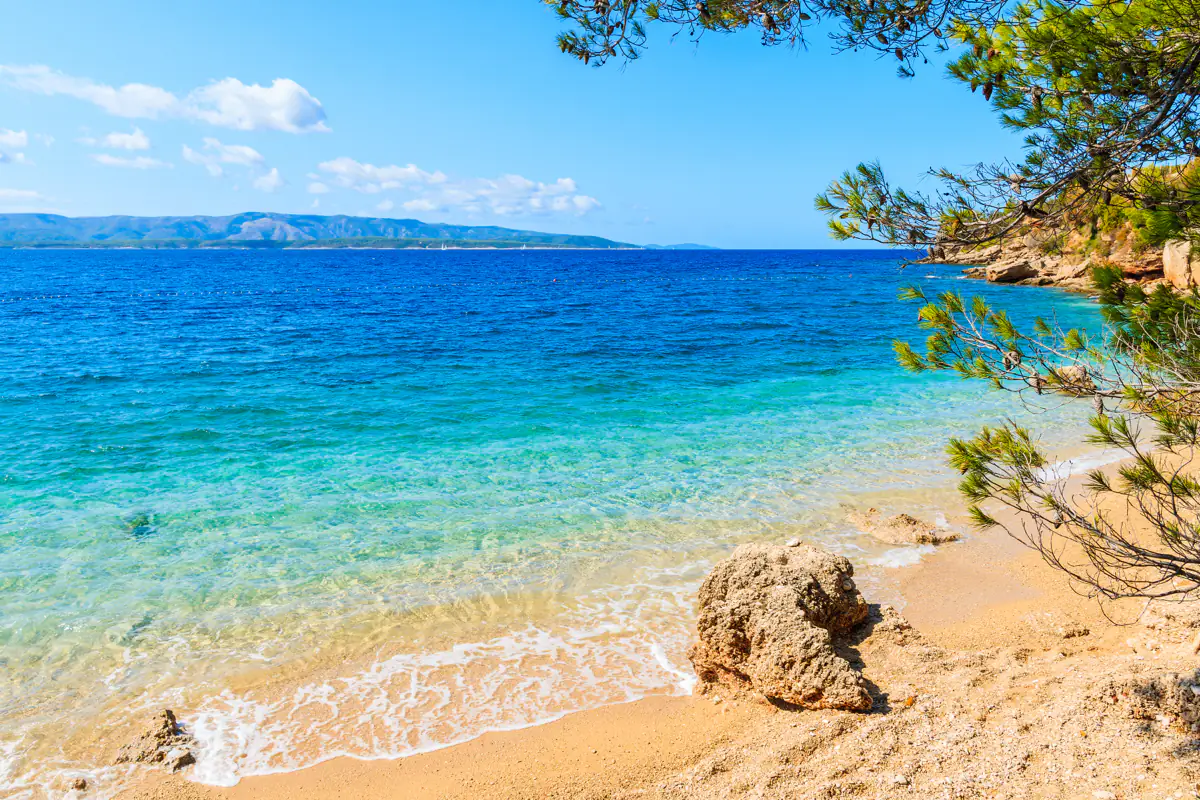
Everyone who comes to Bol heads for Zlatni Rat. Fewer people walk the other way along the seafront, to the small green headland at the eastern end of town, where a Dominican monastery with a slender bell tower stands right above the water. Below its walls lies Martinica: a curving pebble beach with clear, gently shelving water, a view across the channel to Hvar, and a calm that the famous spit only has early in the morning.
This guide explains where the monastery beach is, what to expect, what to see in the monastery itself, how to get there on foot from Bol or by boat from Split, and how to combine it with Zlatni Rat in one day.
Where is the monastery beach?
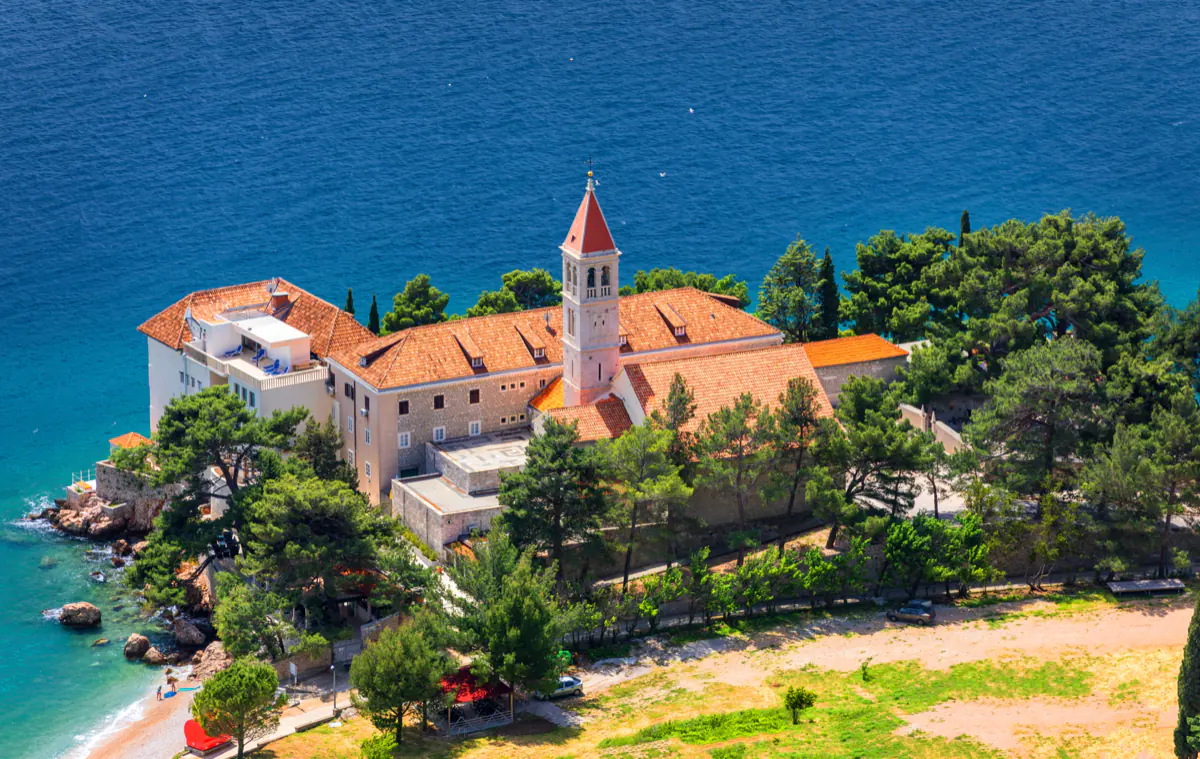
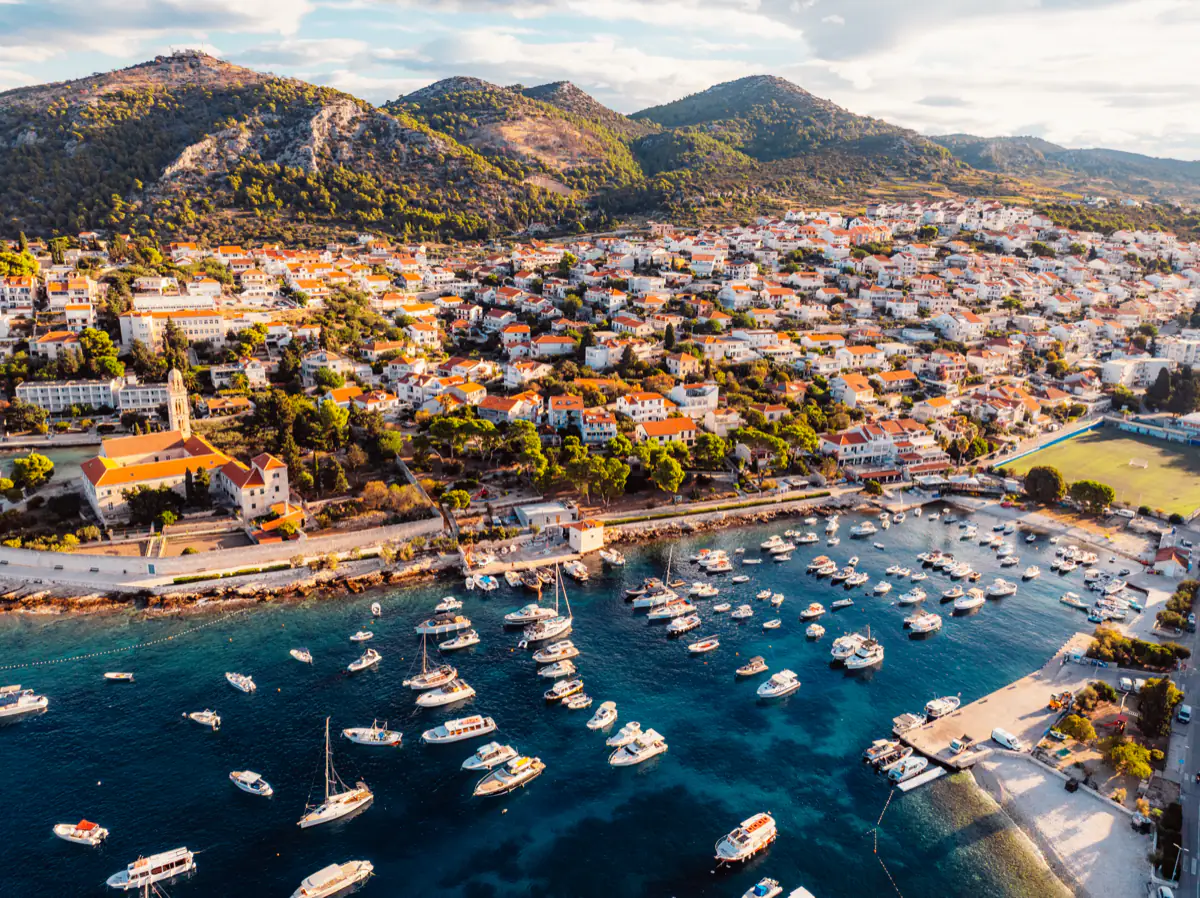
Bol lies on the south coast of Brač, facing Hvar across a narrow channel. Zlatni Rat is about two kilometres west of the harbour; the Dominican monastery stands on Glavica, a low headland covered in pines and cypresses at the eastern edge of town. The monastery has looked out over this stretch of sea since the 15th century, when Dominican friars settled here.
Several small beaches surround the headland. Martinica is the pebble bay just east of the monastery, and next to it lie Bijela kuća, named after a white building that was once a Dominican school and later a hotel, and Kotlina. Together they are the quieter side of Bol.
What to expect on the beach
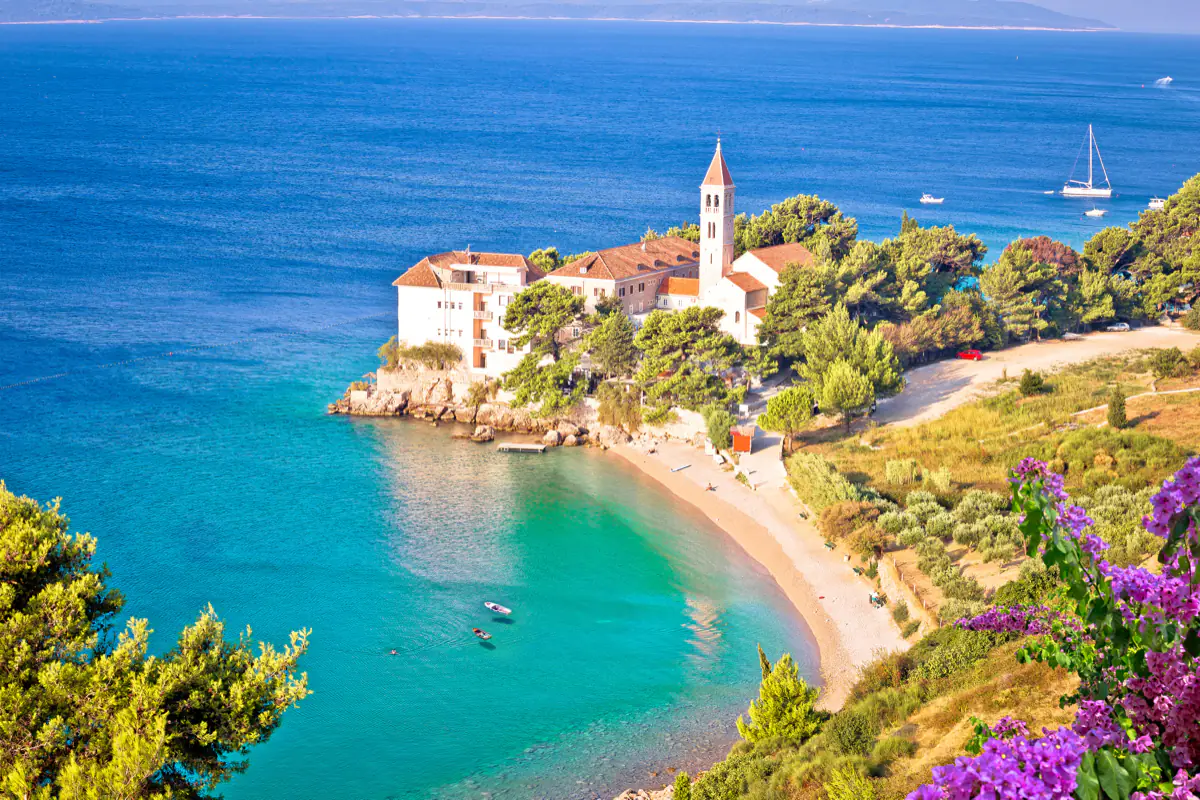
Martinica is a natural beach of small, smooth pebbles in a gentle curve, with the white walls and bell tower of the monastery at one end. The water is shallow close to the shore and slopes gently, which makes it a favourite with families, while the rocks towards the headland are good for snorkelling.
The coves around the headland each have their own character:
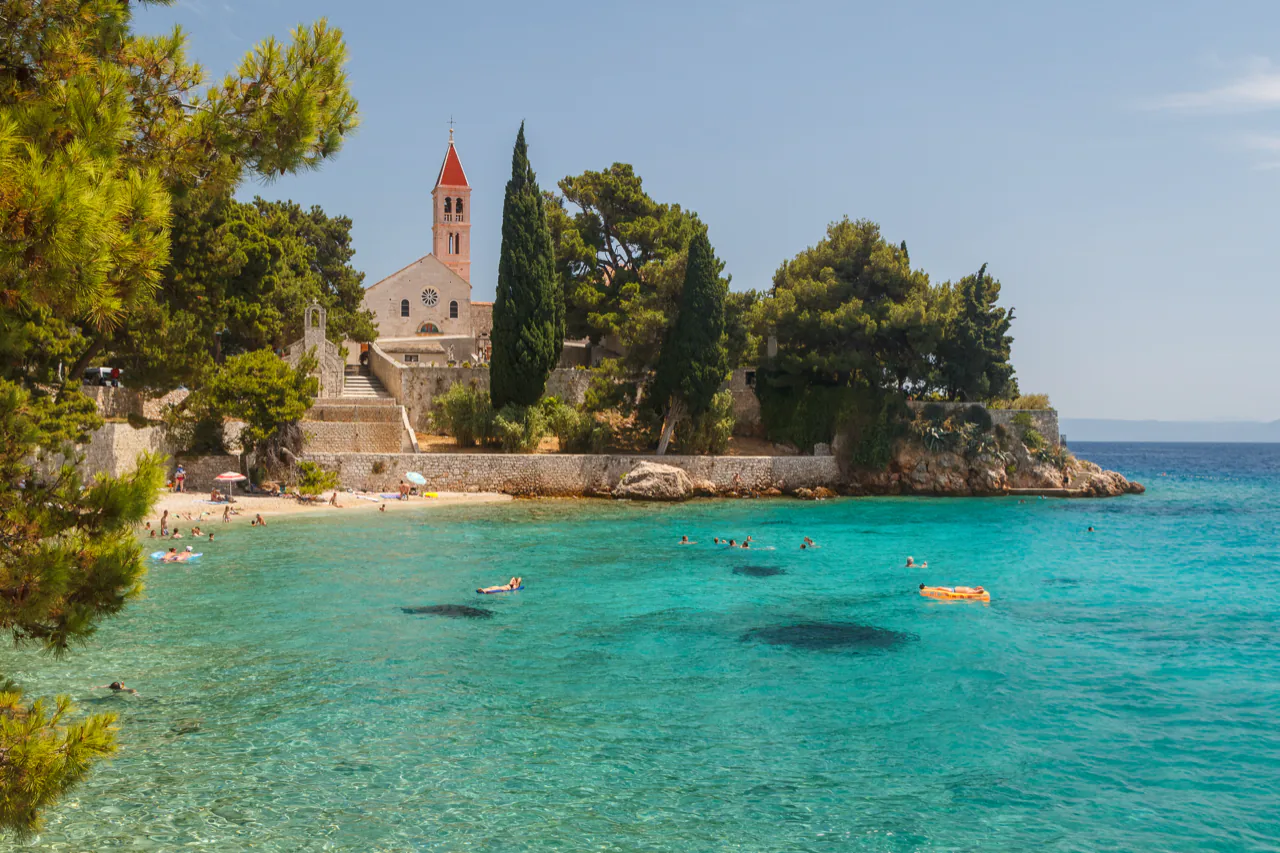
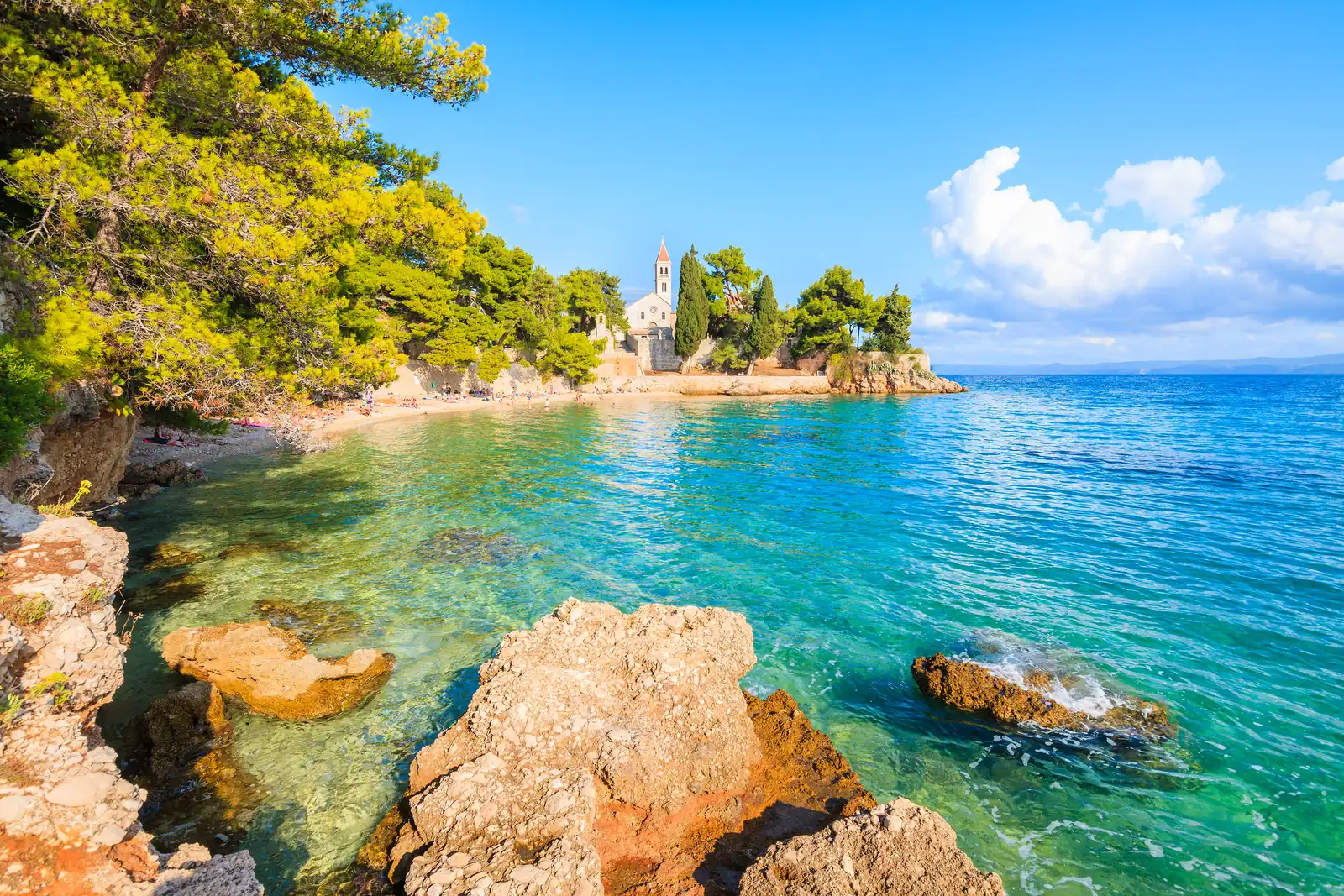
It is a simpler beach than Zlatni Rat: fewer sunbeds, fewer bars and much less noise. Bring what you need for the day, or have lunch in Bol, a short walk away. As on most rocky Adriatic shores, there can be sea urchins on the rocks, so water shoes are a good idea.
The Dominican monastery and its museum
The monastery is the reason to come here even if you do not swim. The Dominicans built their church and cloister on Glavica in the 15th century, on a site that had been settled long before them. Inside the church, look for the altarpiece of the Madonna and Child with saints, painted in the Venetian workshop of Jacopo Tintoretto.
The small monastery museum, renovated and reopened in 2021, spreads over three floors and shows archaeological finds from the area, old coins, church art and documents from the history of Bol, with texts in English and Croatian. The church itself is often closed outside service times, while the museum keeps regular summer hours – check locally before you go.
How to get there on foot
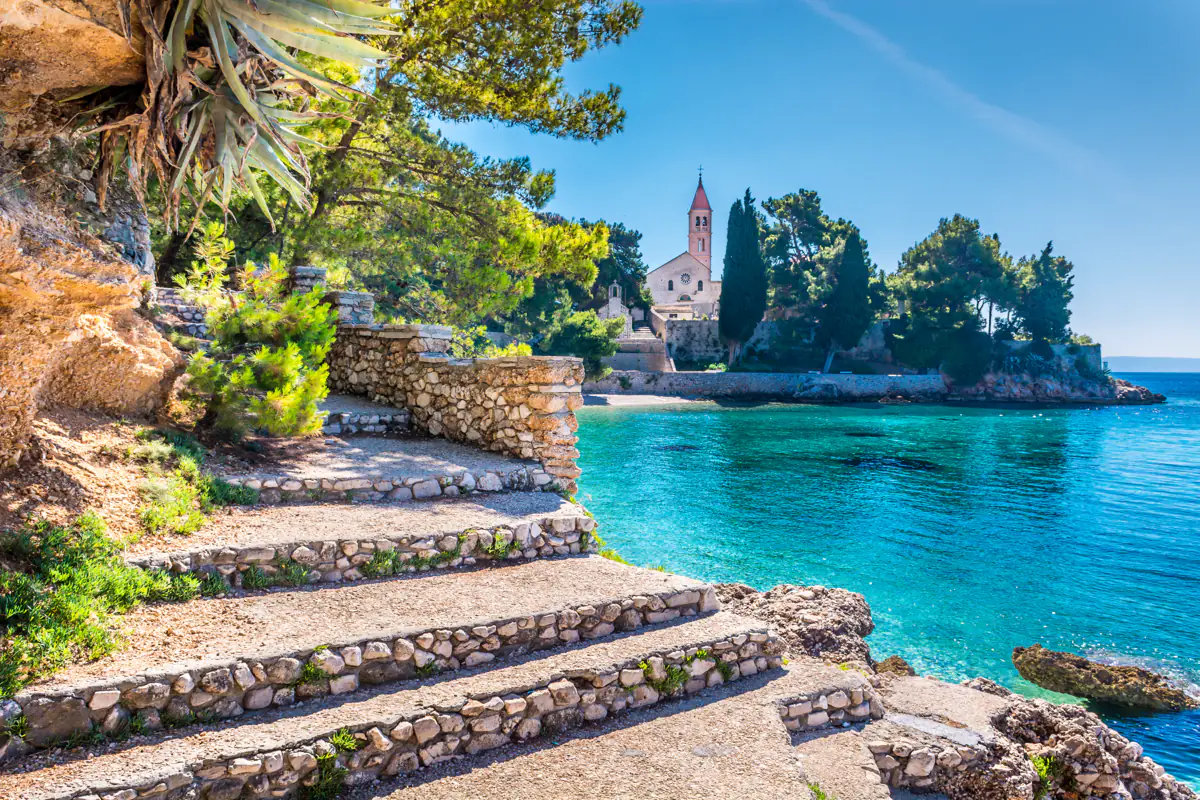
From Bol harbour, walk east along the seafront past the cafés, the old stone houses and the small fishing boats. After about 10 to 15 minutes, the promenade leads around the bay to the monastery and down to the beaches. There is no need for a car – parking in Bol is limited in summer anyway.
If you are staying near Zlatni Rat, the walk along the coast through Bol to the monastery takes around 40 minutes, and it is one of the nicest walks on the island in the evening, when the light falls on the mountain behind the town.
How to visit by boat
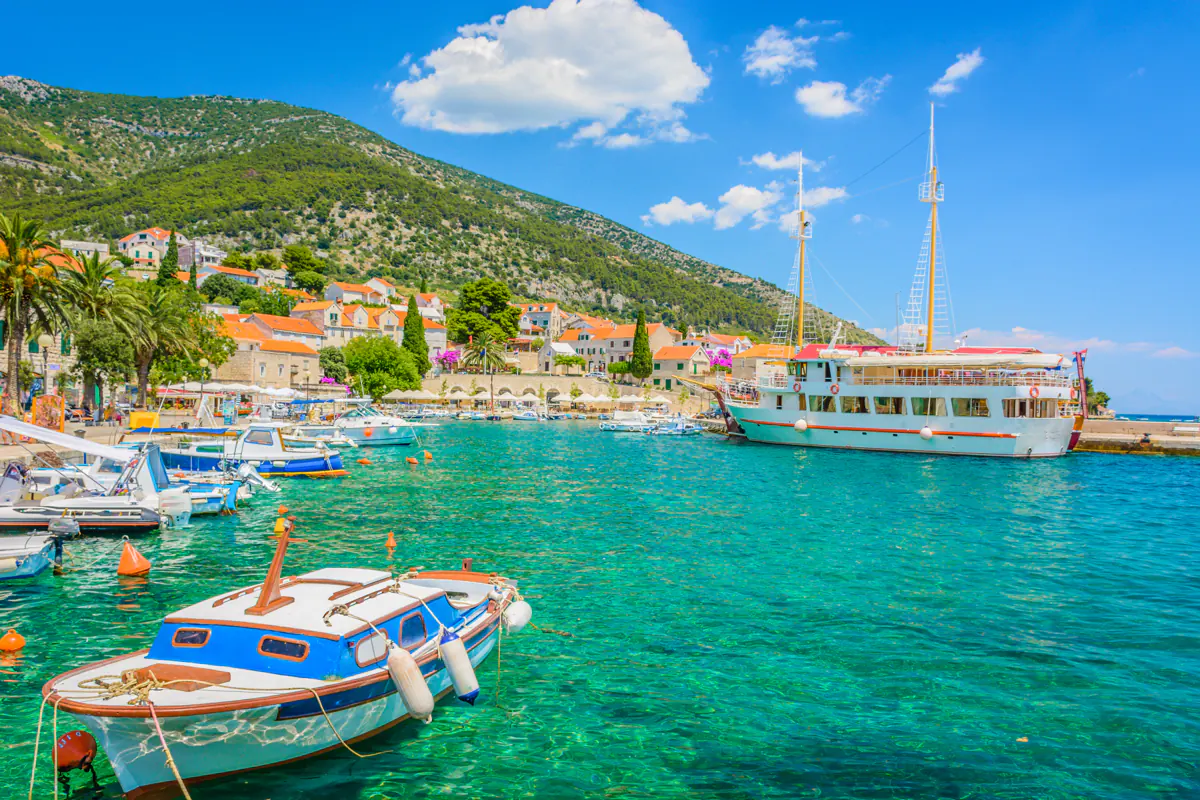
From Split, the boat ride to Bol takes about an hour, through the Split Gate between Šolta and Brač and along the island's south coast. With a private boat, your skipper anchors off the headland in the clear water in front of the monastery, and you swim ashore or are taken in by tender – arriving at the beach from the sea is how most people would like to arrive anywhere.
On our boats, everything is included: skipper, hostess, fuel for the whole route, Croatian wine and sparkling wine, beer, soft drinks, snacks, towels and snorkelling gear. You decide how long to stay; we plan the rest of the day around the wind.
When to visit
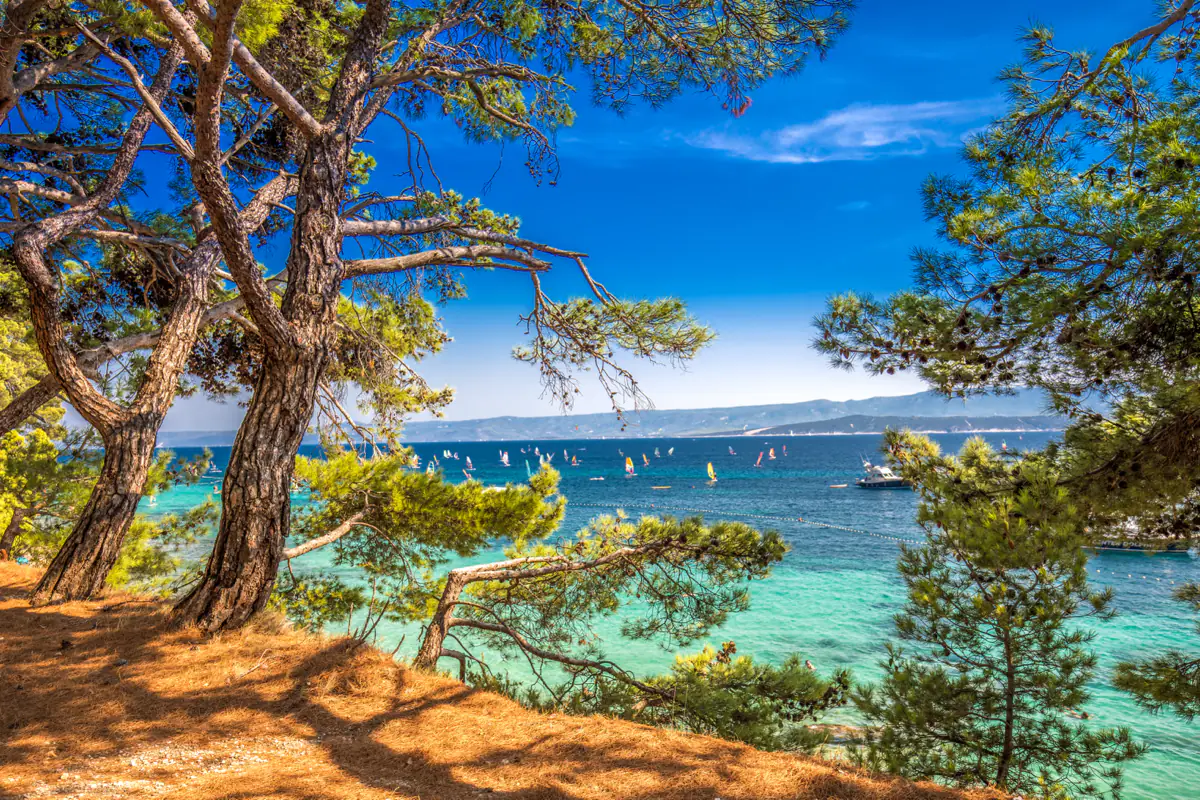
The beach is at its best from June to September. In July and August, come in the morning or after 5 pm, when the water is calm and the day visitors have left. In the afternoon, the maestral wind often blows through the channel between Brač and Hvar – excellent for the windsurfers off Zlatni Rat, but it can bring small waves to the beaches of Bol, so swimmers do best early in the day.
May and early October are quiet and beautiful, with cooler water and the town still relaxed.
Combine the monastery beach with Zlatni Rat
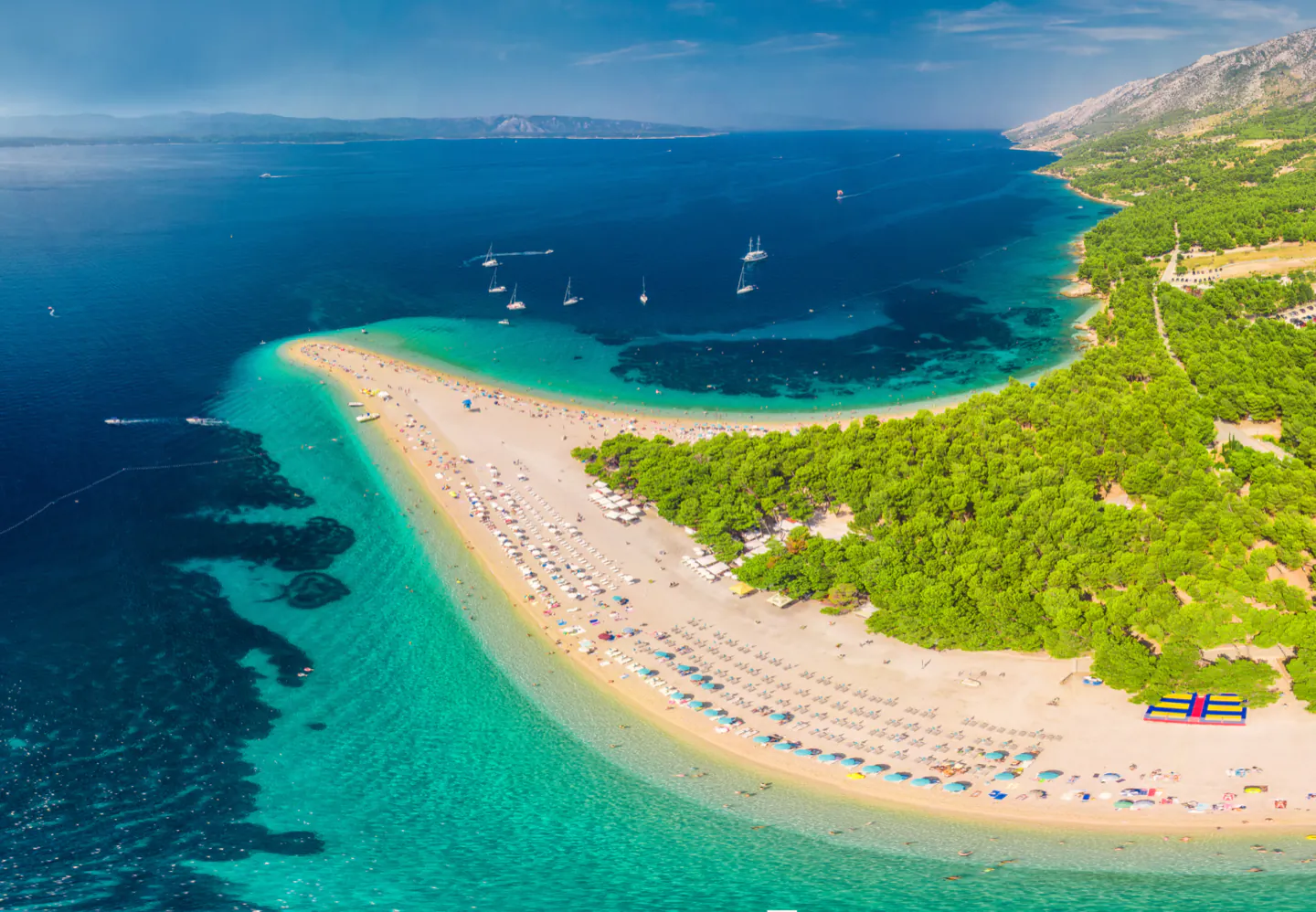
The monastery beach and Zlatni Rat are only a few minutes apart by boat, so it is easy to see both: Zlatni Rat early, before it gets busy, then a coffee or lunch in Bol harbour, and an afternoon swim below the monastery when the crowds on the spit are at their peak.
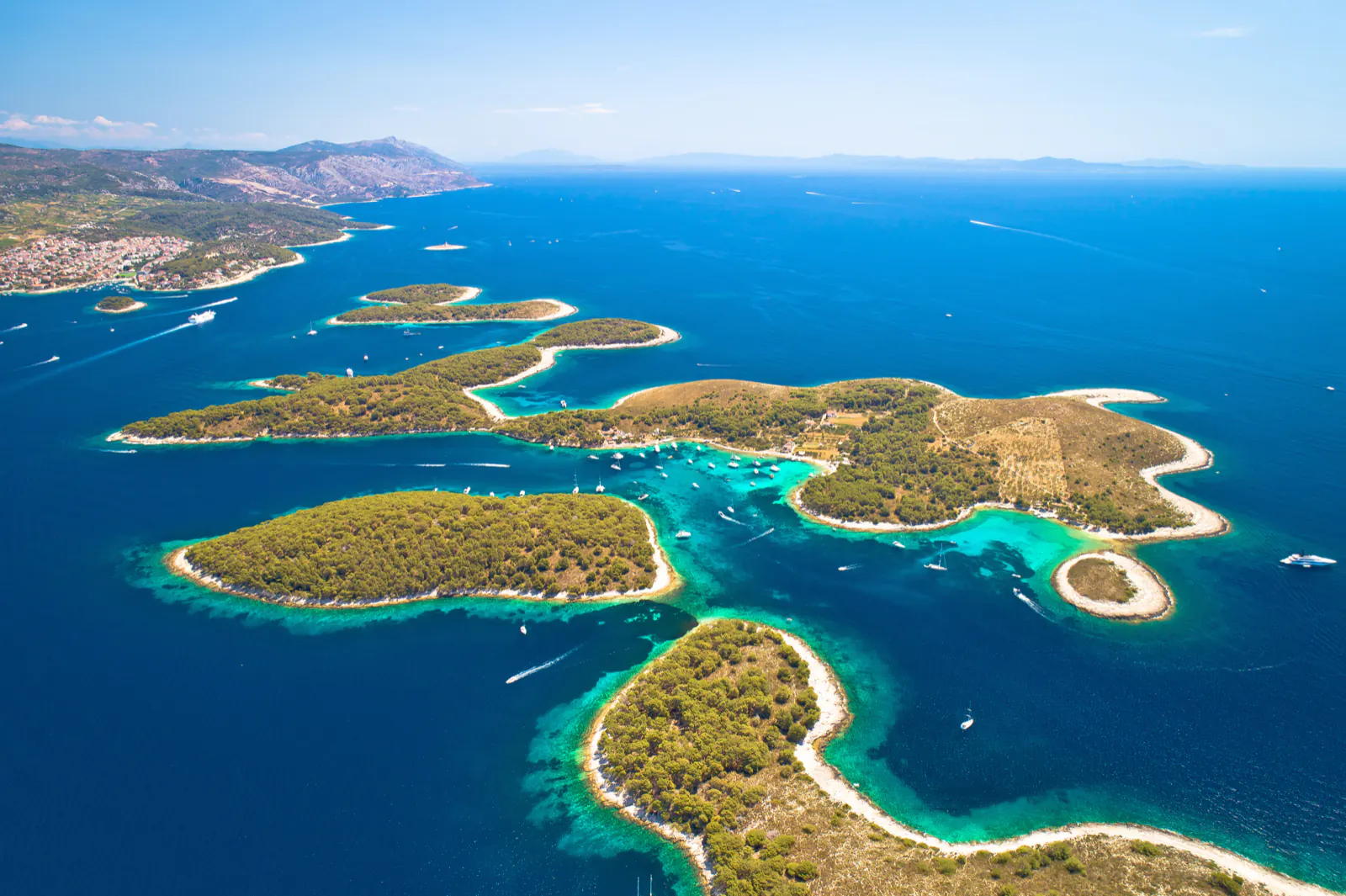
If you have a full day, cross the channel to Hvar and the Red Rocks, or follow the wild south coast of Brač west towards Murvica and the hermitage of Blaca, with quiet coves on the way.
Tips for your visit
Visit the museum before your swim, while it is cooler.
Wear water shoes for the rocks and possible sea urchins.
Bring shade or claim a spot under the pines in the morning.
Dress respectfully if you enter the church – cover your shoulders and swimwear.
Stay for the evening and walk back along the seafront into Bol for dinner.
Plan your day in Bol
Tell us your date and how many you are, and we will plan a day from Split or Omiš that includes the monastery beach, Zlatni Rat and the quiet coves of Brač.
You can also explore boat charter on Brač, see our Brač & Zlatni Rat tour or browse our boats.