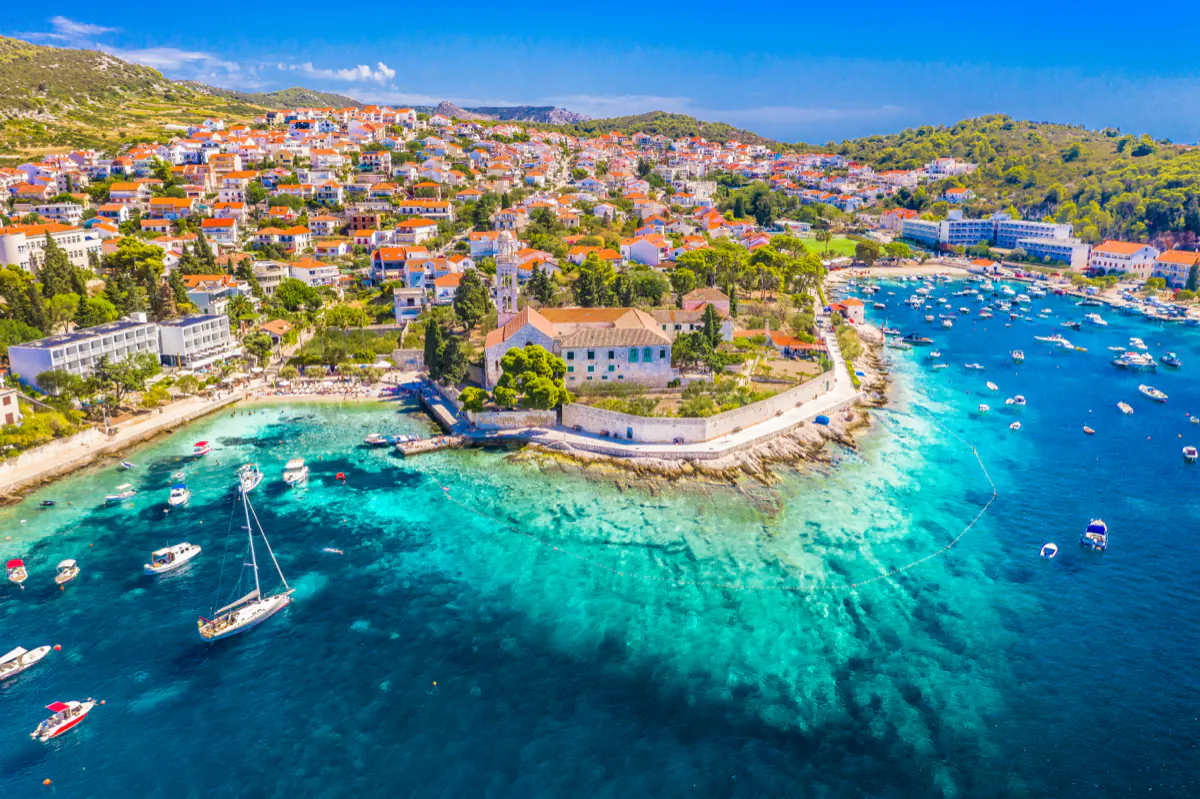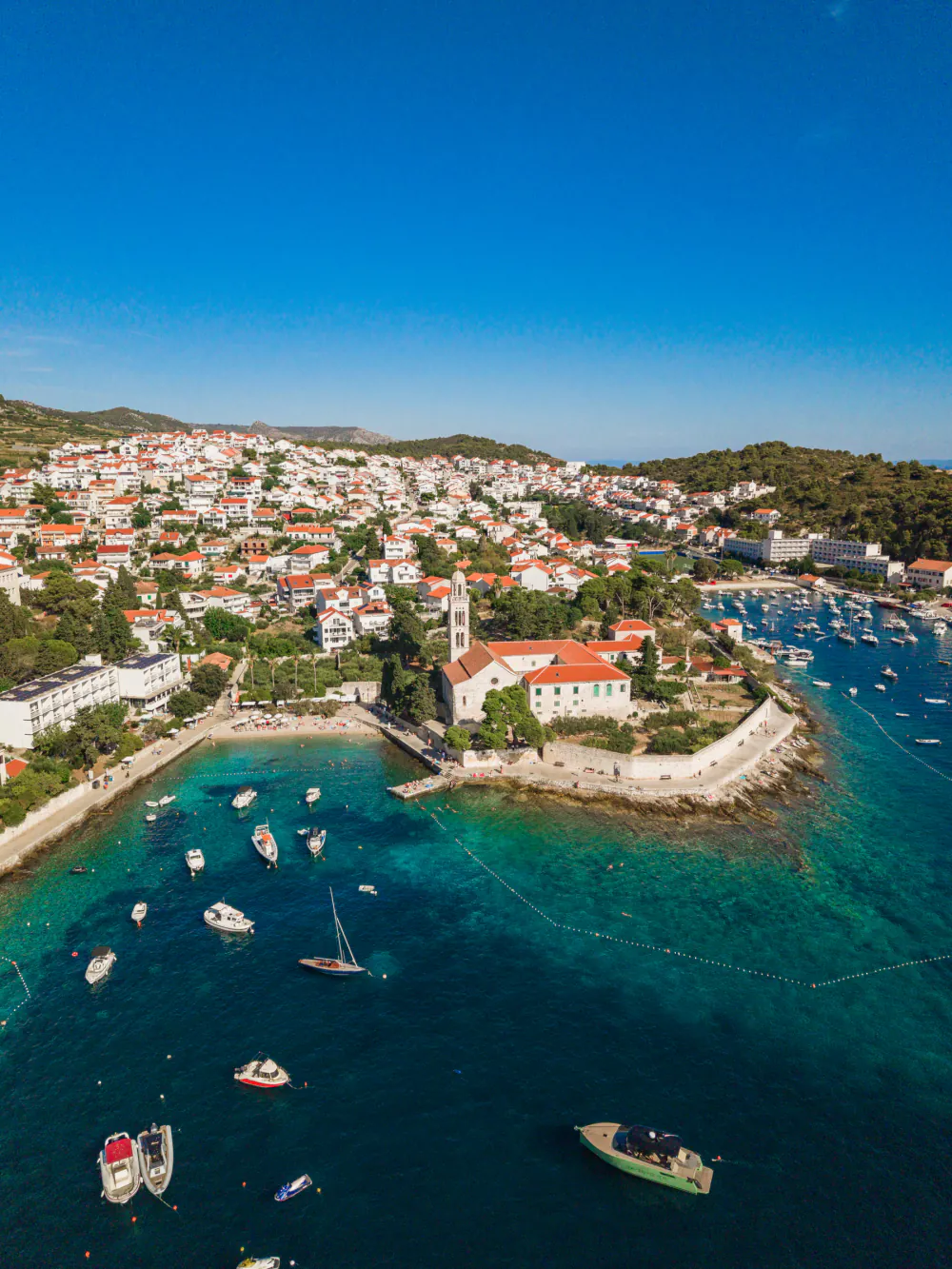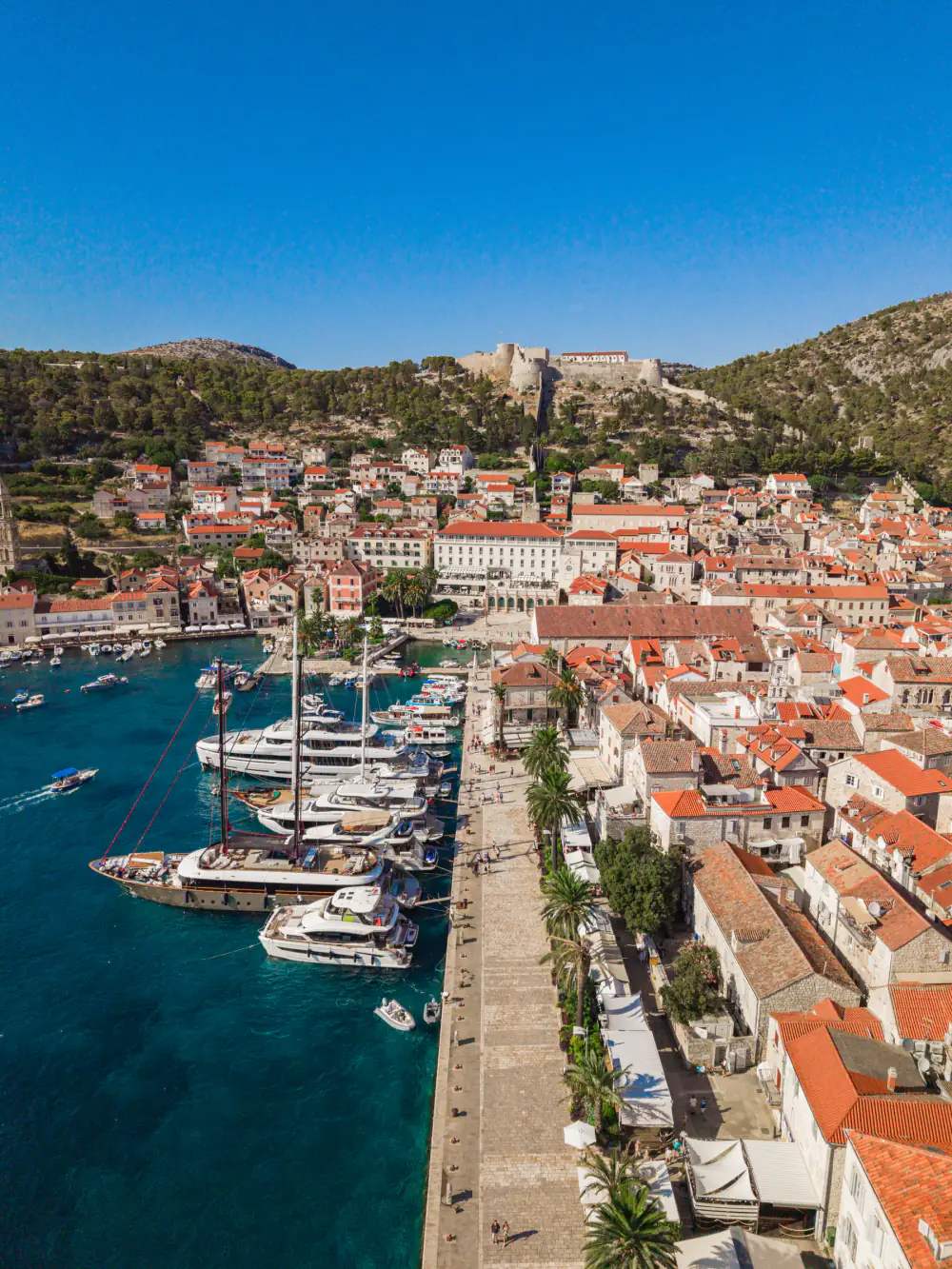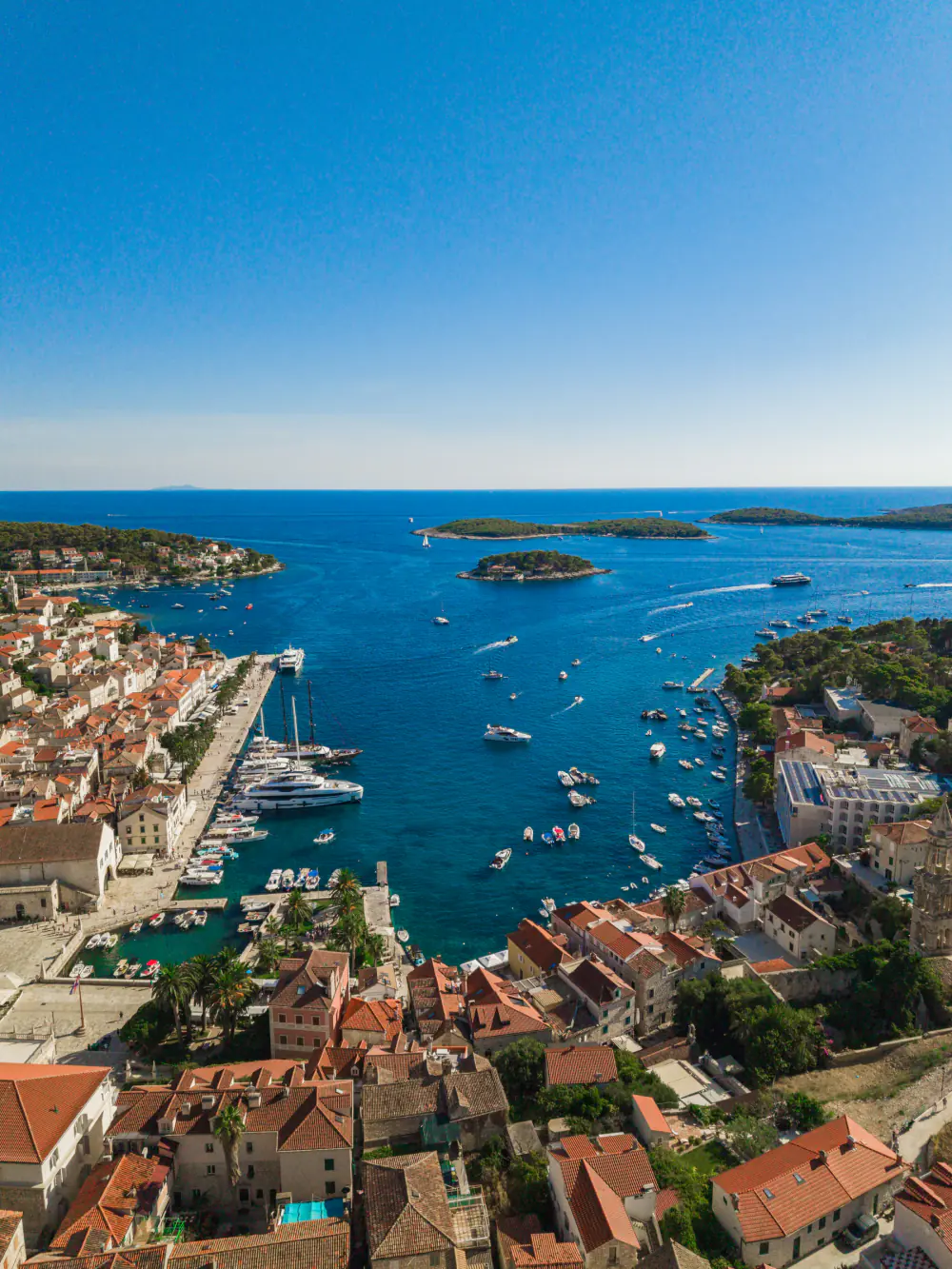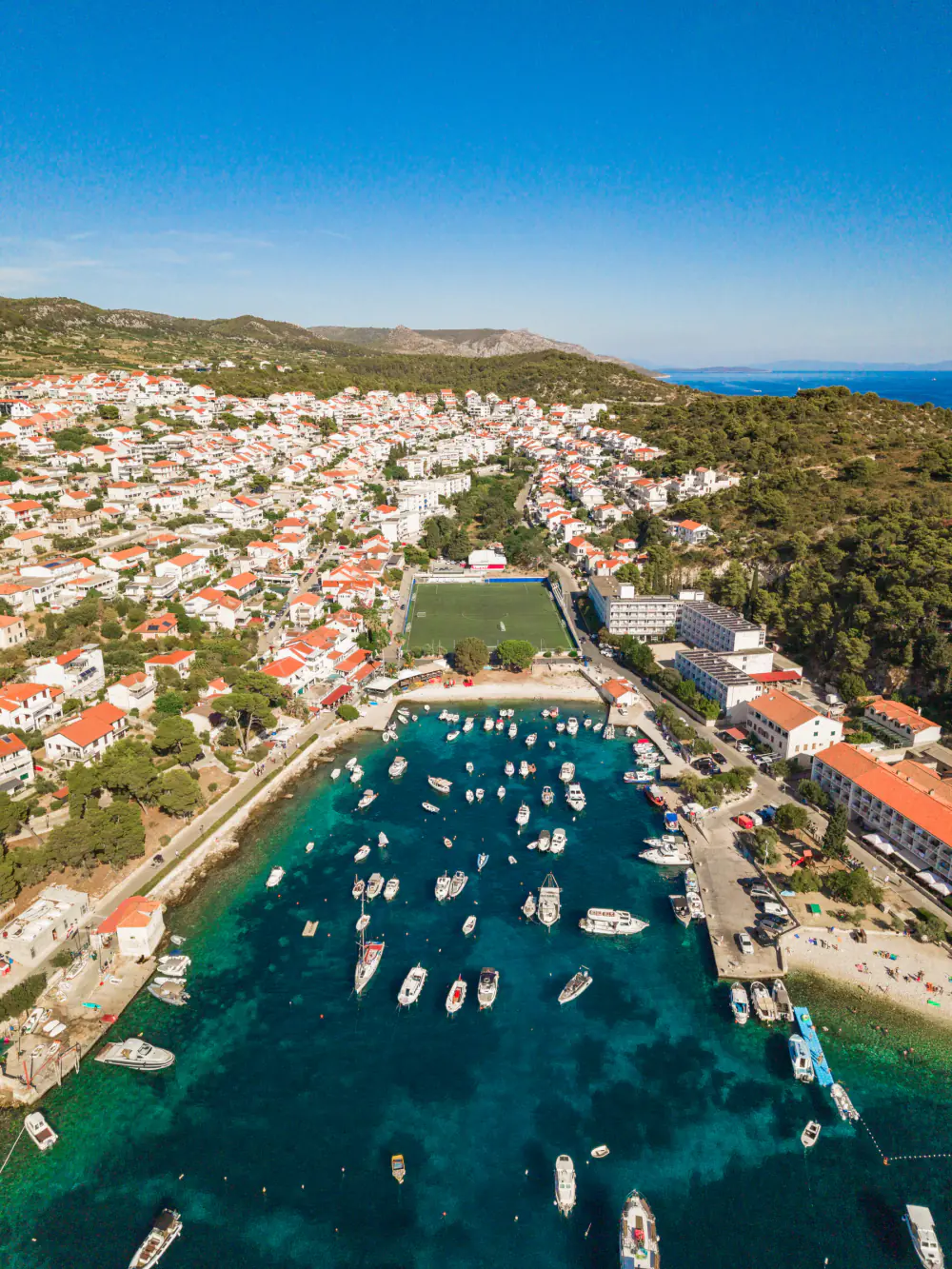
Hvar Town is best known for its yachts and its nightlife, but its heart is a small Venetian town of white stone, built around one of the largest squares in Dalmatia. Narrow stepped lanes climb from the harbour to Renaissance palaces and churches, a fortress watches over the bay from the hill, and the theatre above the old Arsenal is one of the oldest public theatres in Europe.
This guide covers the highlights of Hvar's old town – St Stephen's Square and the cathedral, the Arsenal, the lanes of Groda, the Spanish Fortress, the Franciscan monastery and the Benedictine convent – plus when to go and how to arrive by boat.
A Venetian town on the sea
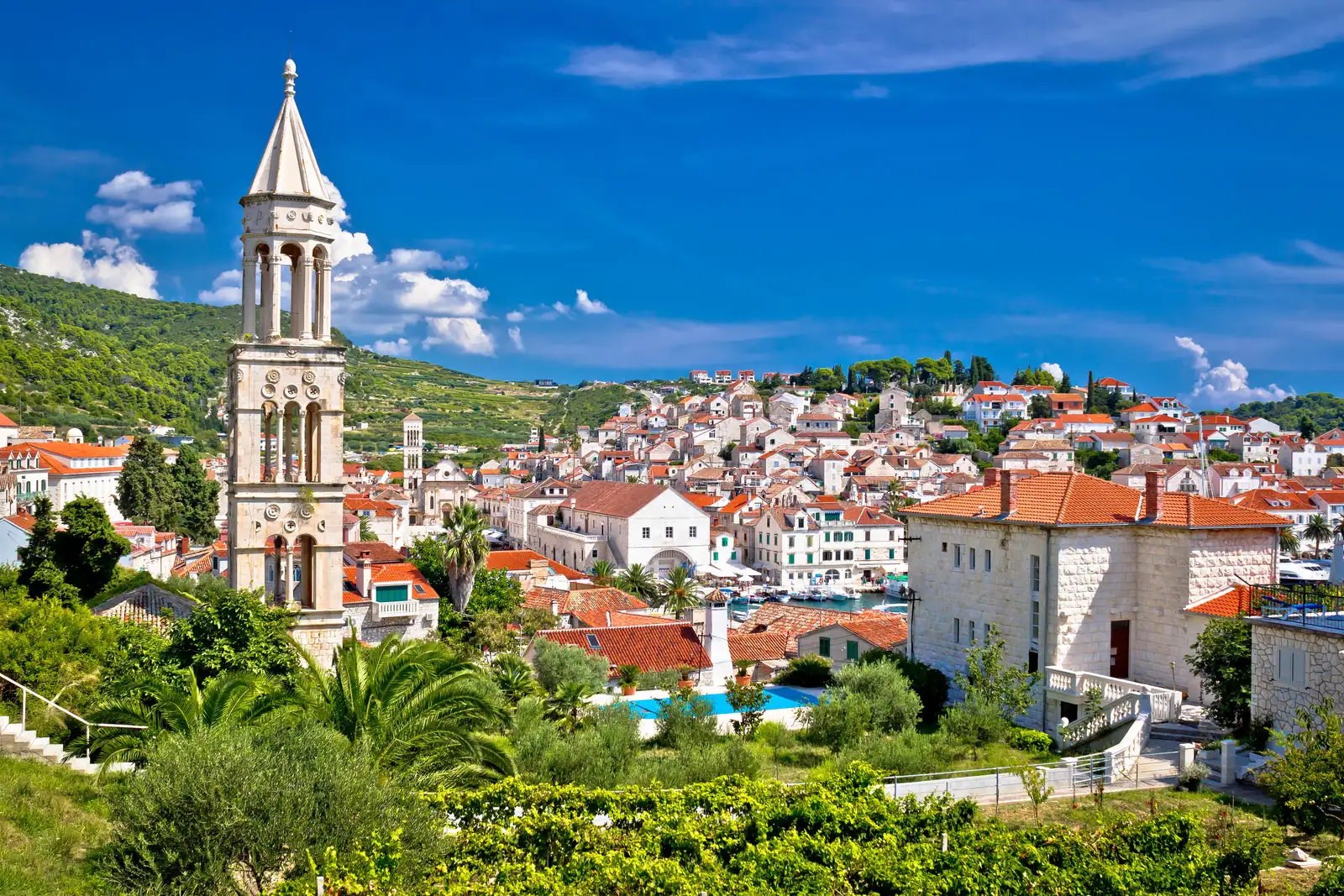
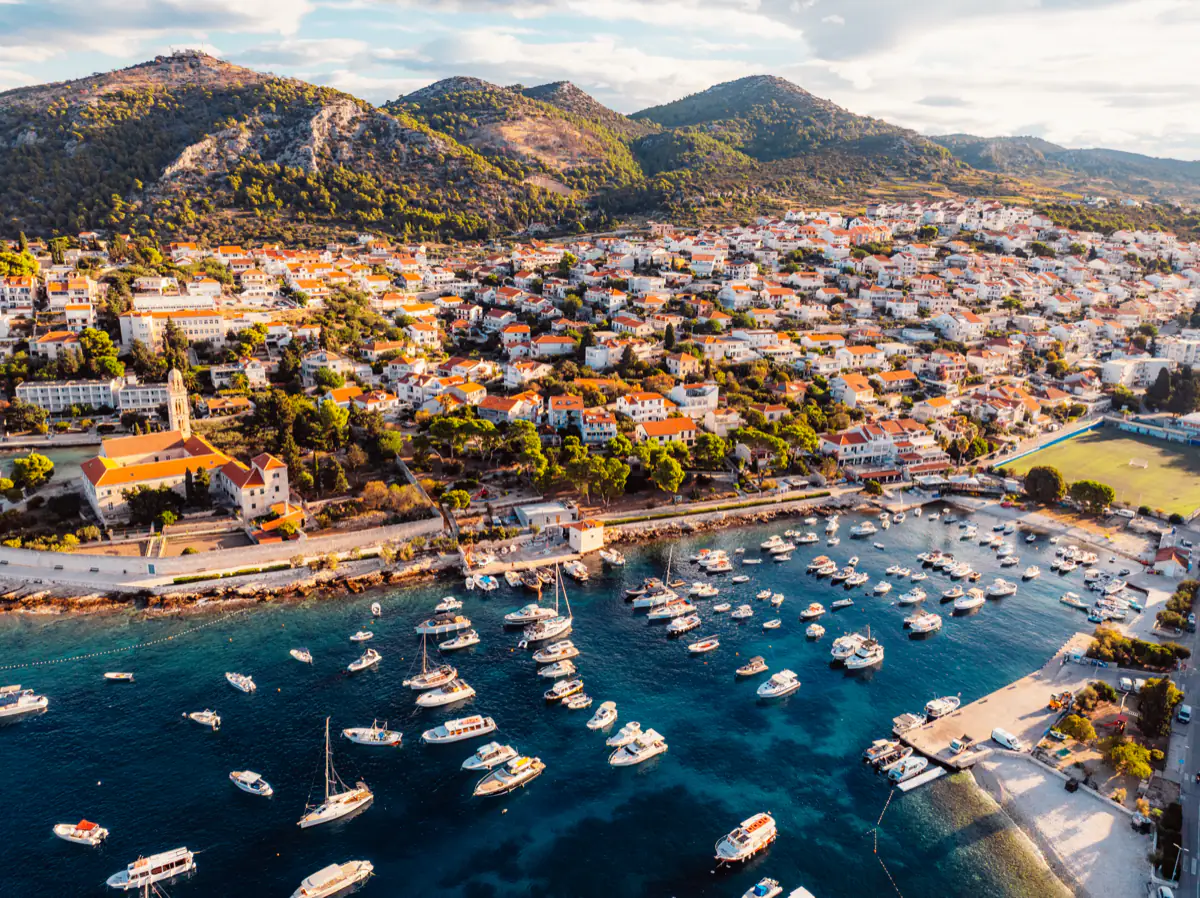
For centuries Hvar Town was one of the most important harbours on the eastern Adriatic, a stop for Venetian galleys sailing between Venice and the eastern Mediterranean. That wealth built the town you see today: a walled medieval quarter climbing the hill to the north, a Renaissance square by the sea, and noble palaces, churches and monasteries along the waterfront.
The old town is small and entirely car-free. You can walk across it in ten minutes, but it rewards a slow stroll – early in the morning, when the stone is still cool and the cafés are setting out their chairs, it is at its most beautiful.
St Stephen's Square and the cathedral
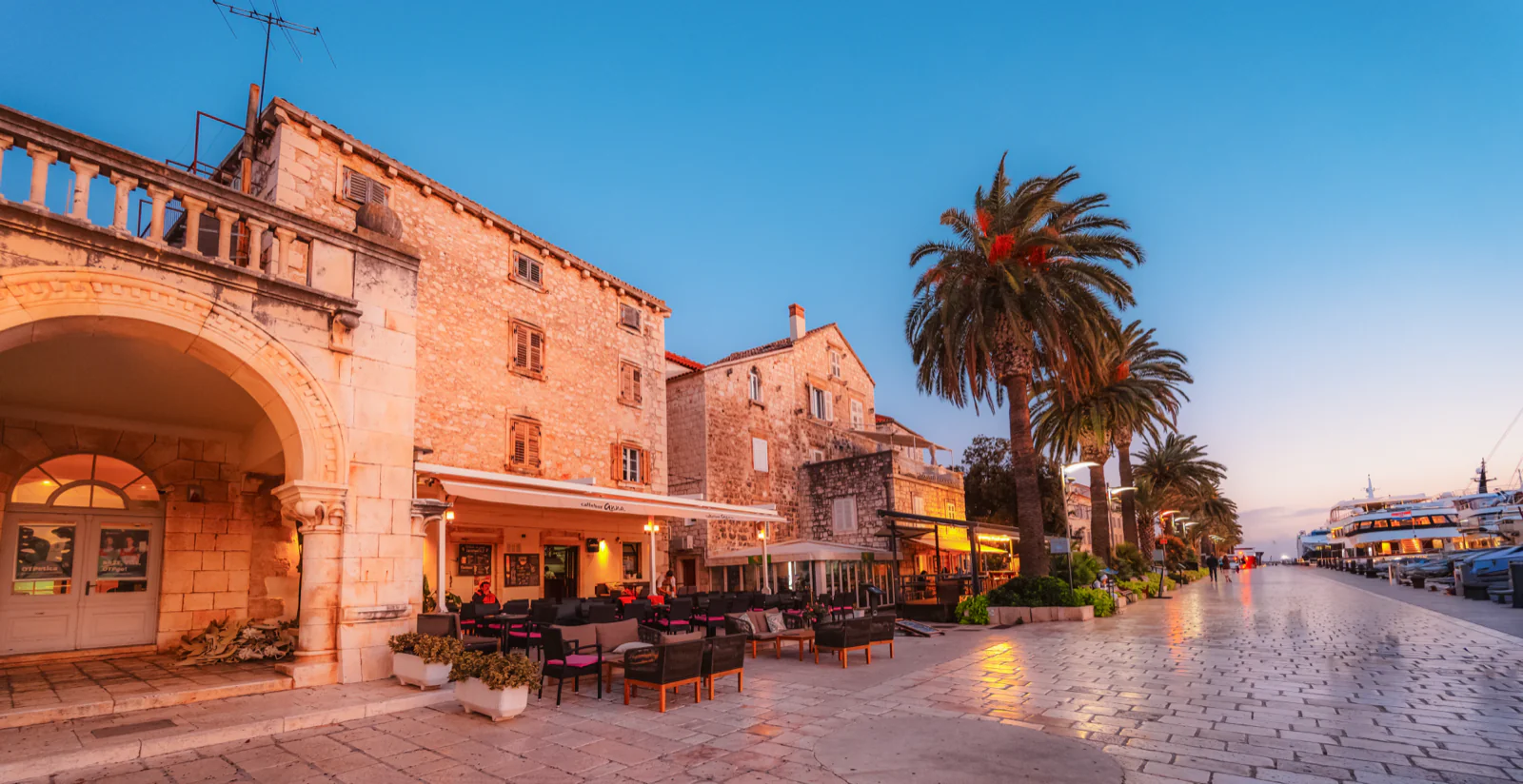
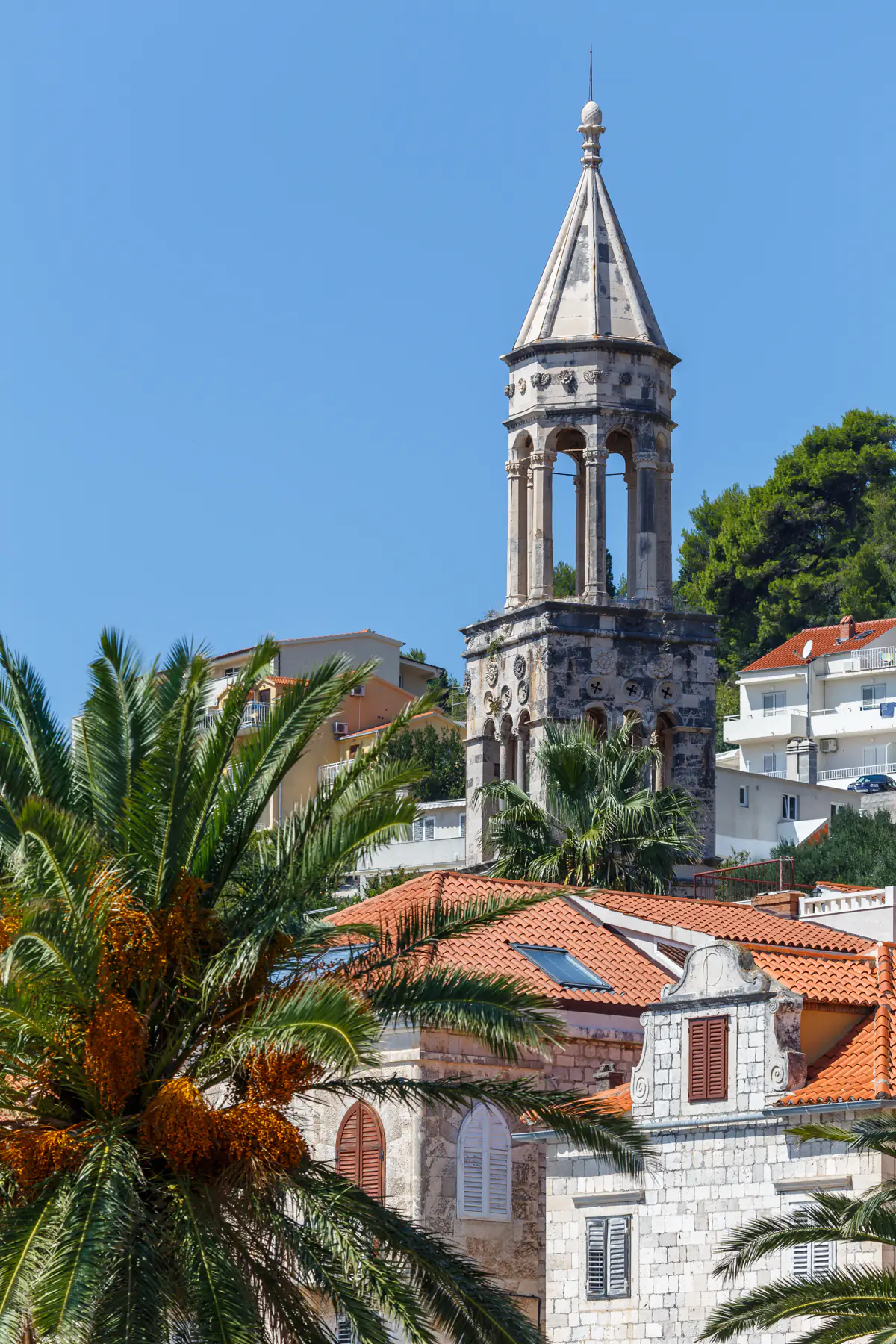
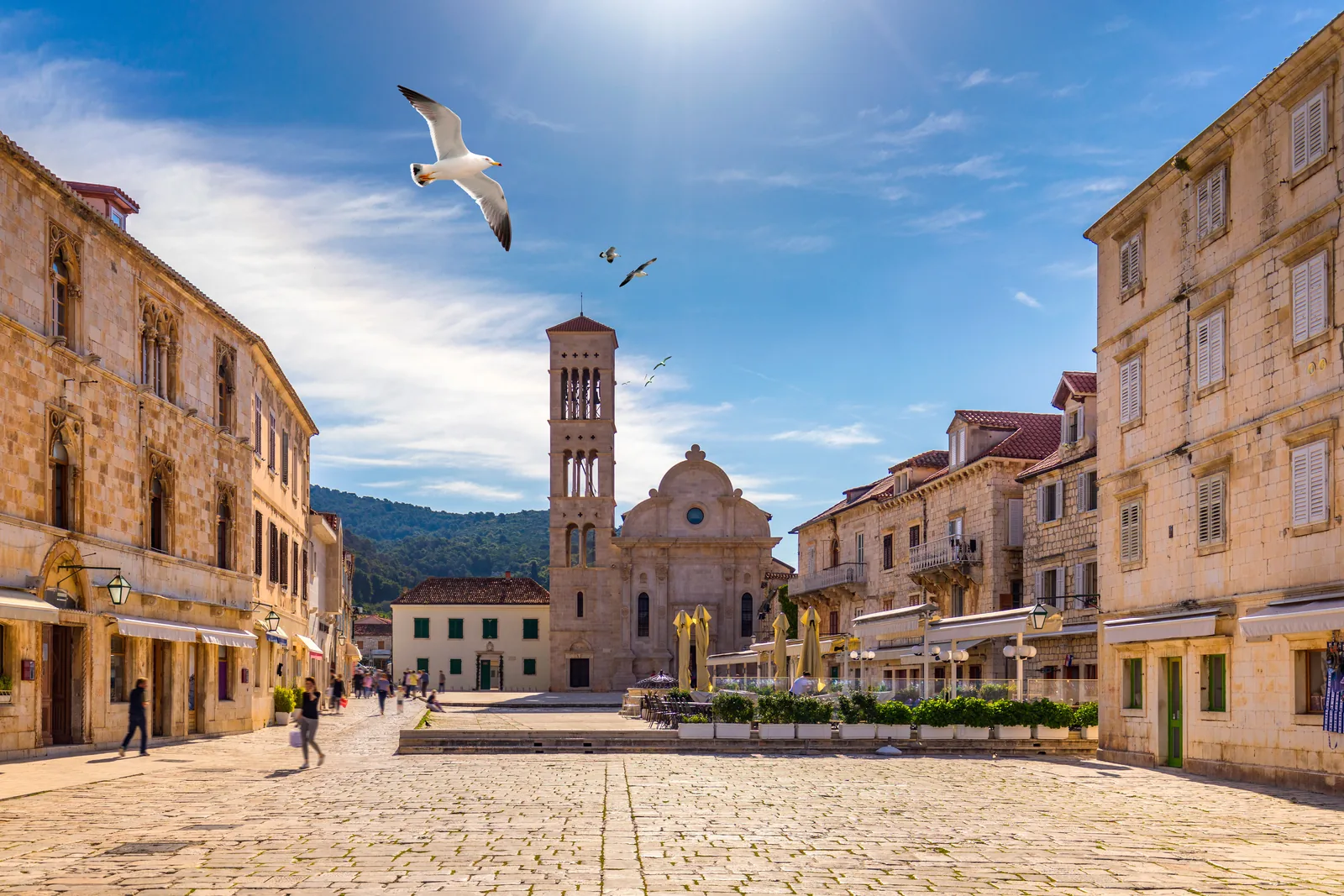
St Stephen's Square, the Pjaca, is the heart of Hvar Town. Covering around 4,500 square metres, it is one of the largest squares in Dalmatia – and it was once a sea inlet, filled in over the centuries. At its eastern end stands St Stephen's Cathedral, with its Renaissance façade and slender bell tower; at the western end, the square opens onto the harbour.
Look for the old stone well in the middle of the square, the cafés along both sides, and the view from the cathedral steps back down to the boats. In the evening, the square is where the whole town meets.
The Arsenal and the historic theatre
On the south side of the square, the great arch of the Arsenal once sheltered a Venetian war galley. Above it, in 1612, the town opened a theatre for all its citizens, regardless of class – one of the oldest public theatres in Europe. The date is still carved over the entrance.
Today the Arsenal and theatre are part of the town's museum and gallery spaces, and the terrace above the arsenal offers a fine view over the square and the harbour.
Wander the lanes of Groda
North of the square, the medieval quarter of Groda climbs the hillside inside the old town walls. Its lanes are narrow, stepped and paved in polished stone, with flowers spilling from balconies, small family restaurants and Gothic and Renaissance palaces – among them the unfinished Hektorović palace with its delicate windows.
Every corner seems to have its own view:
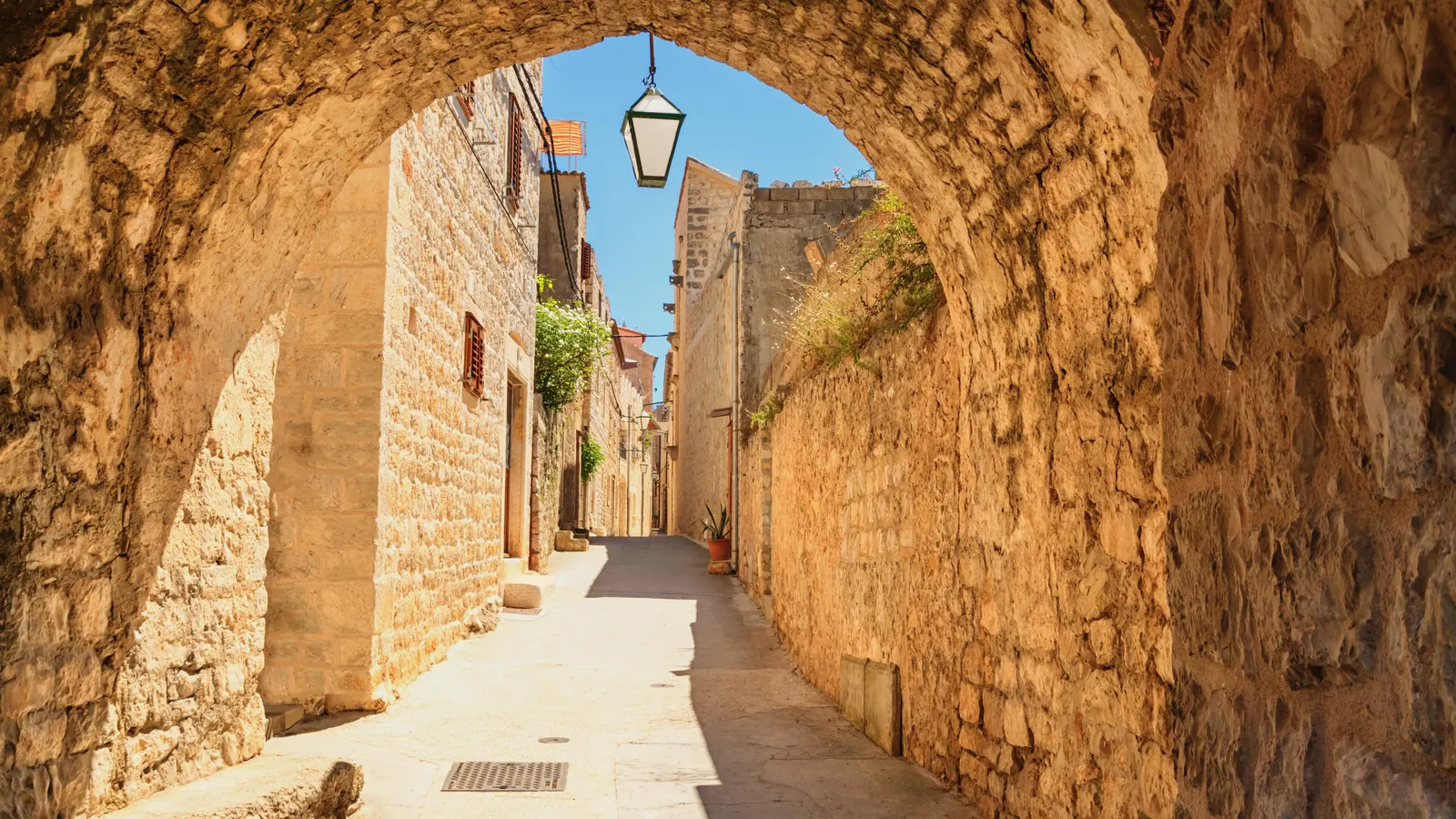
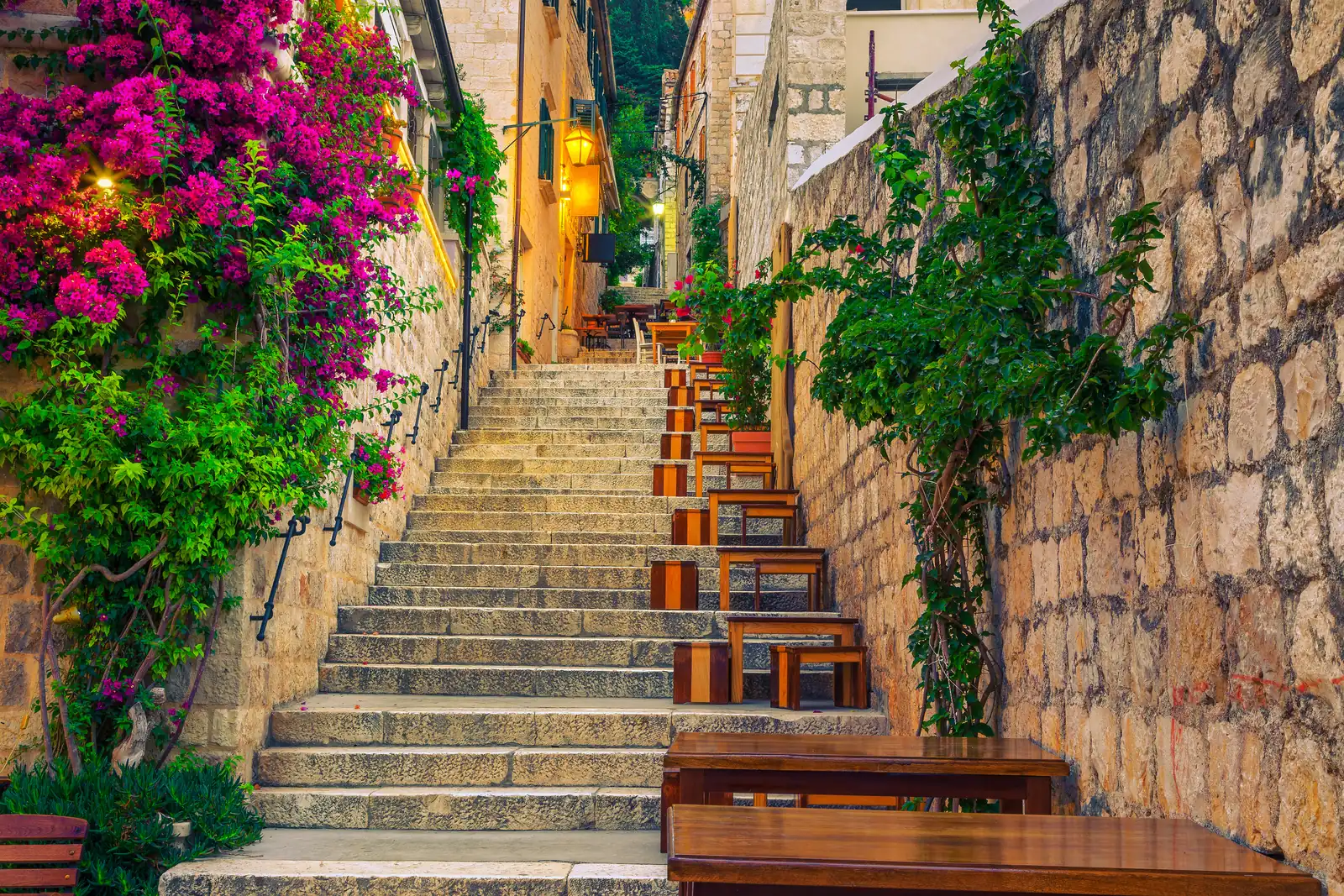
Get a little lost: the lanes all lead either up towards the walls or down towards the square. The higher you climb, the quieter it gets.
Climb to the Spanish Fortress
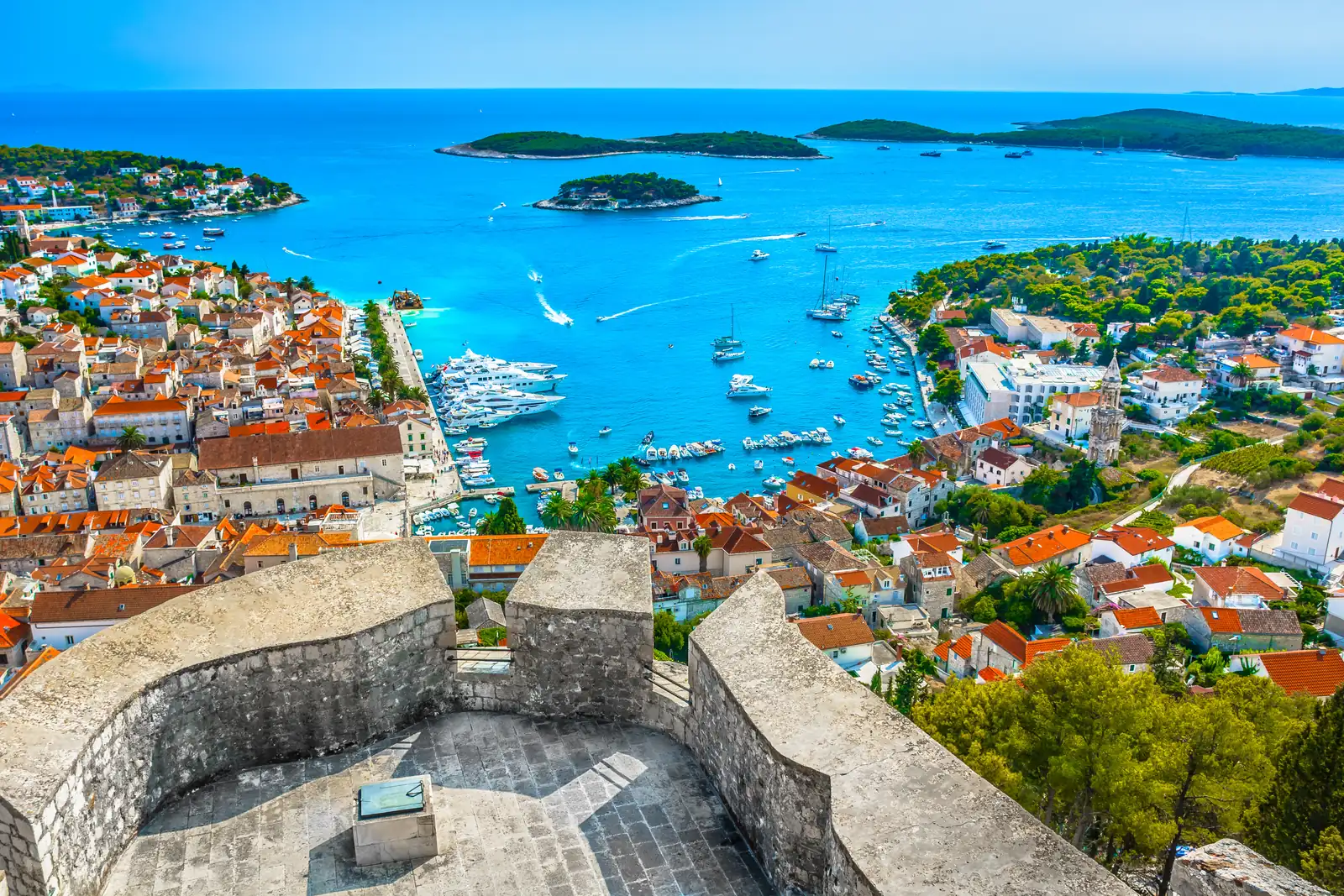
Above the old town stands the Spanish Fortress, or Fortica, built in the 16th century to defend the town and its harbour. From the top of Groda, a path zigzags up through pines and agaves in about 15 to 20 minutes.
The view from the walls is the most famous on the island: the red roofs and bell towers below, the harbour full of boats and the chain of the Pakleni Islands stretching out to sea. Go early in the morning or for sunset – at midday the climb is hot.
The Franciscan monastery and the waterfront
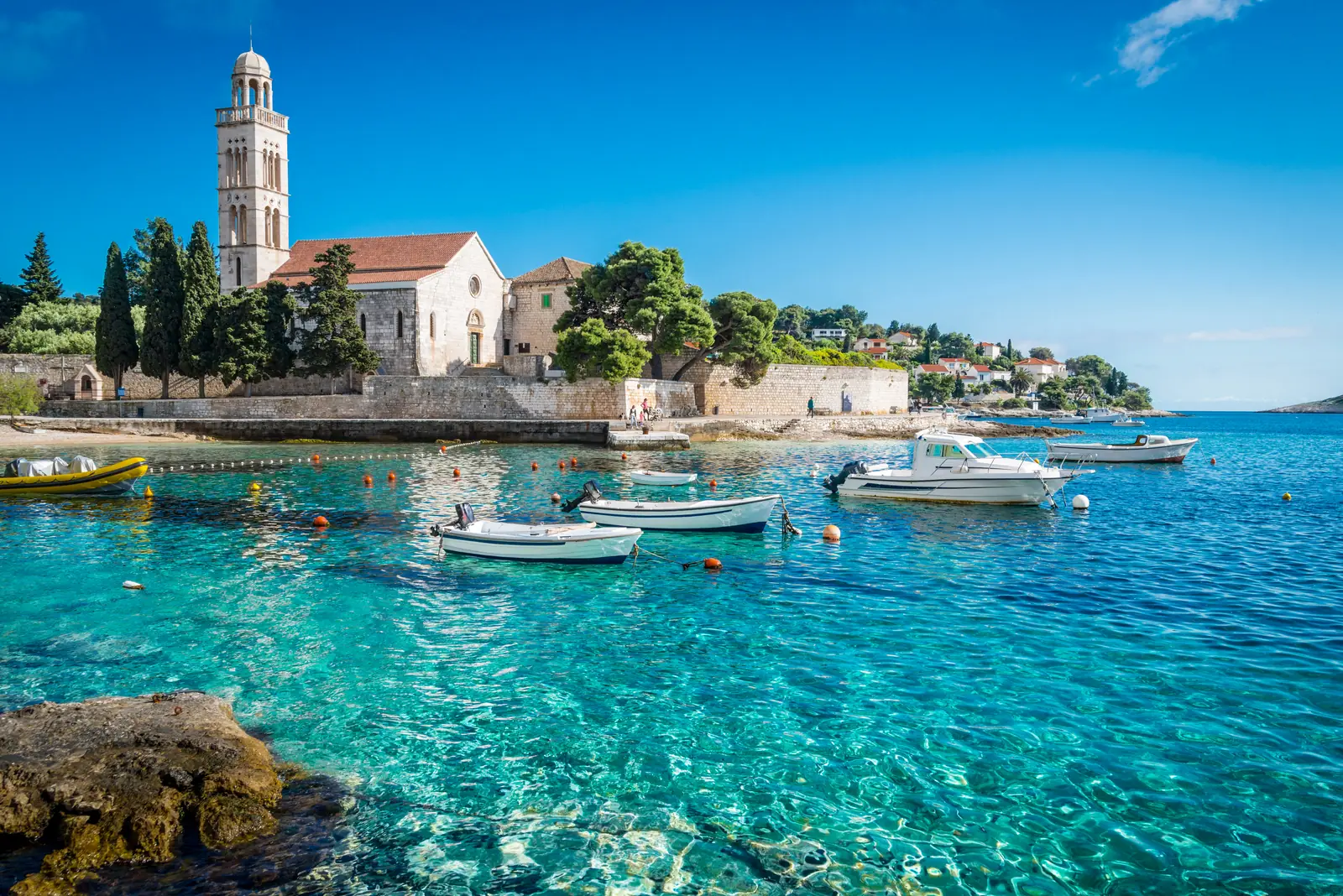
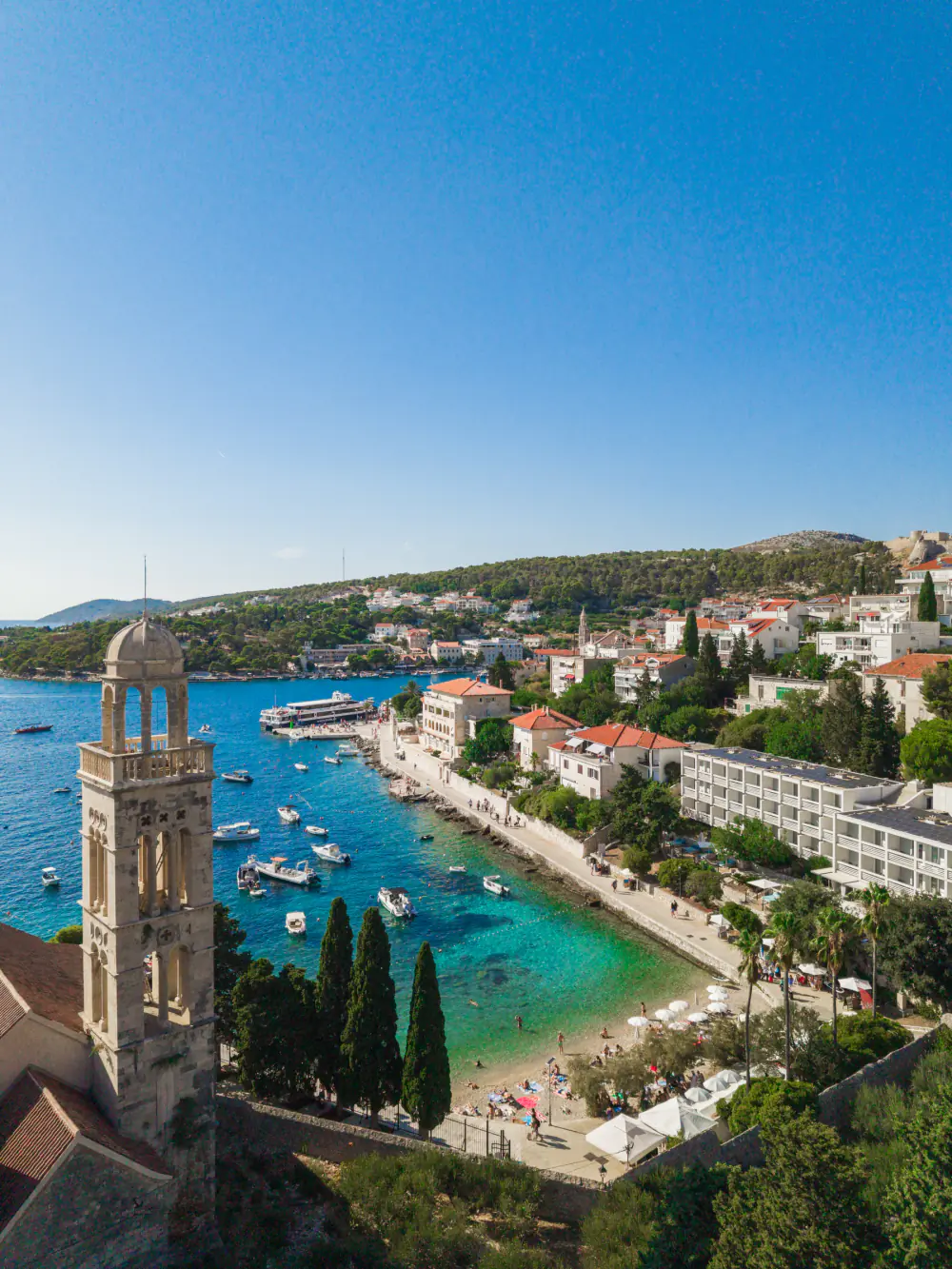
A ten-minute walk along the waterfront east of the harbour leads to the Franciscan monastery, founded in the 15th century on a quiet cove. Its cloister, its garden with an ancient cypress and its museum, home to a large painting of the Last Supper, make a peaceful contrast to the busy harbour.
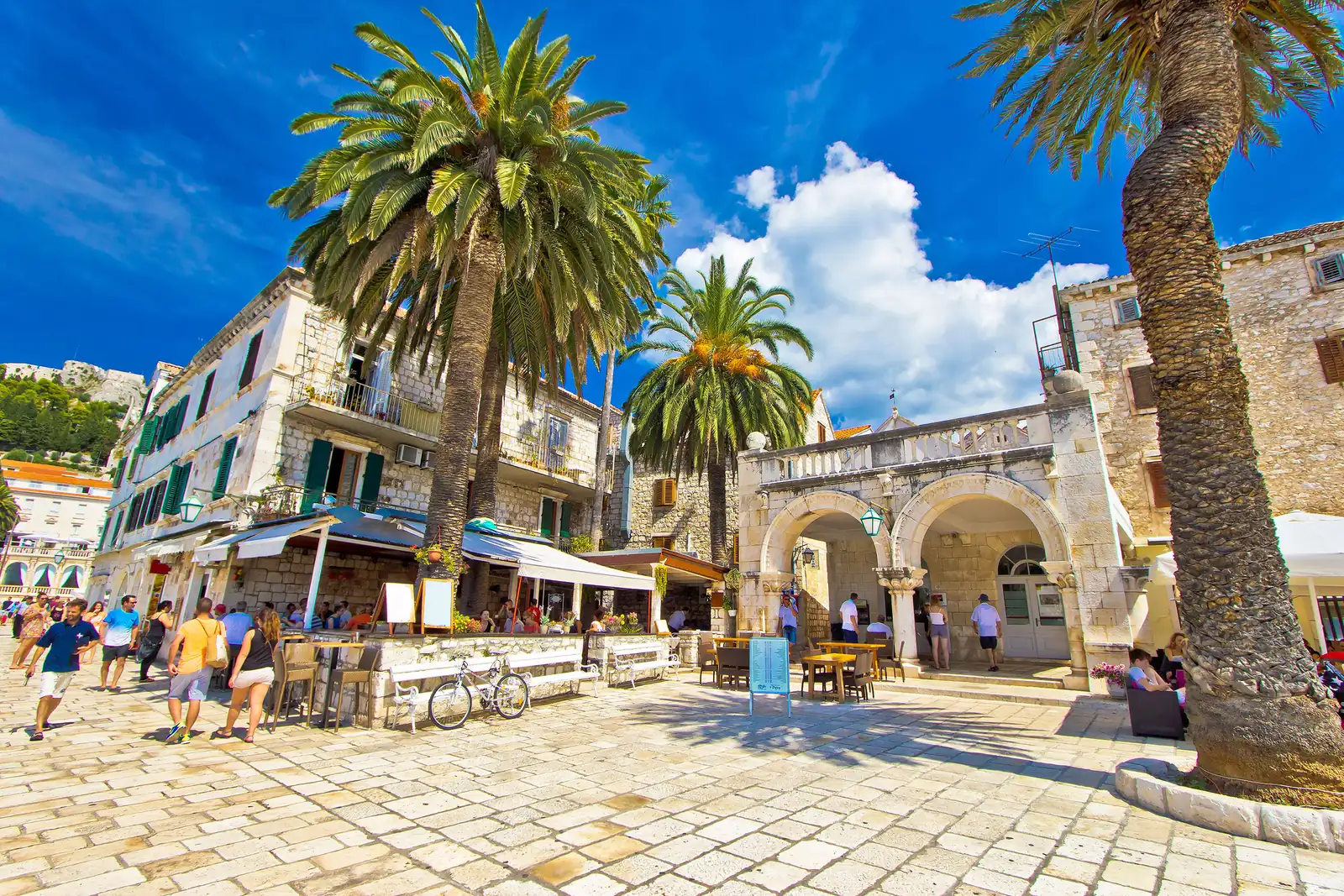
On the way, the palm-lined promenade passes the Venetian loggia and clock tower, small pebble beaches and waterfront cafés – the perfect place for an evening walk.
The Benedictine convent and its agave lace
In a town house in the old town, Benedictine nuns have lived since the 17th century. They are known for a rare craft: lace made from thin threads drawn from the leaves of the agave plant, a tradition protected by UNESCO as part of Croatia's lace-making heritage. A small collection in the convent shows their work.
Opening hours of the convent, the monastery and the museums change with the season, so check locally before you go.
Hvar Town by boat
Arriving by sea is how Hvar Town was meant to be seen: the fortress on the hill, the cathedral tower, and the whole town opening up around the harbour as you come in. From Split, the trip takes about an hour by private motor yacht.
On our boats, everything is included: skipper, hostess, fuel for the whole route, Croatian wine, sparkling wine, beer and soft drinks, snacks, towels and snorkelling gear. Your skipper drops you in the harbour for your walk and picks you up when you are ready – no ferry timetable, no queues.
When to visit Hvar's old town
May, June and September are ideal: warm, lively and far less crowded than July and August. In high summer, explore early in the morning and in the evening, and spend the hot middle of the day swimming. In winter the town is very quiet, with many restaurants and shops closed.
Combine the old town with the islands
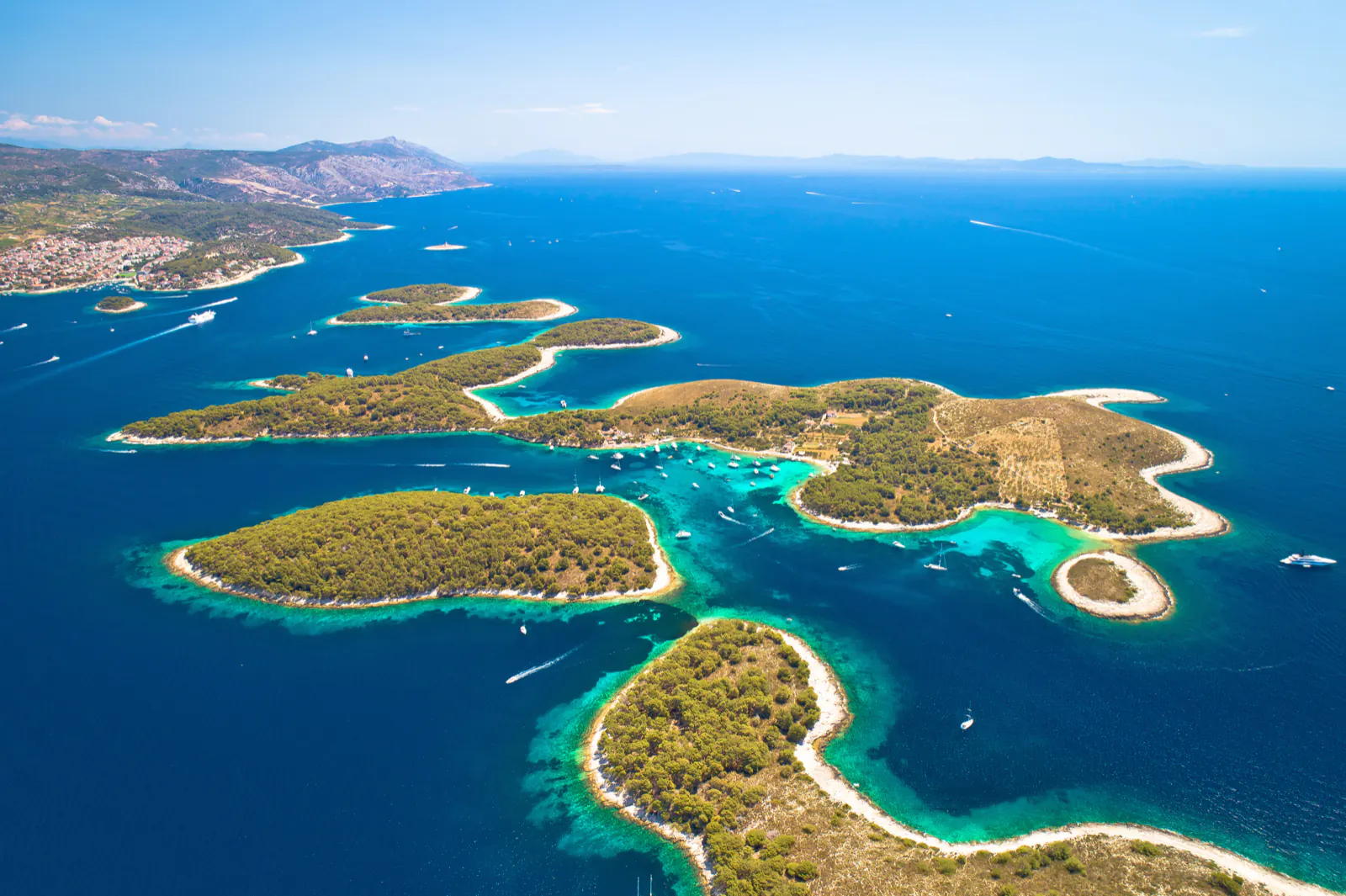
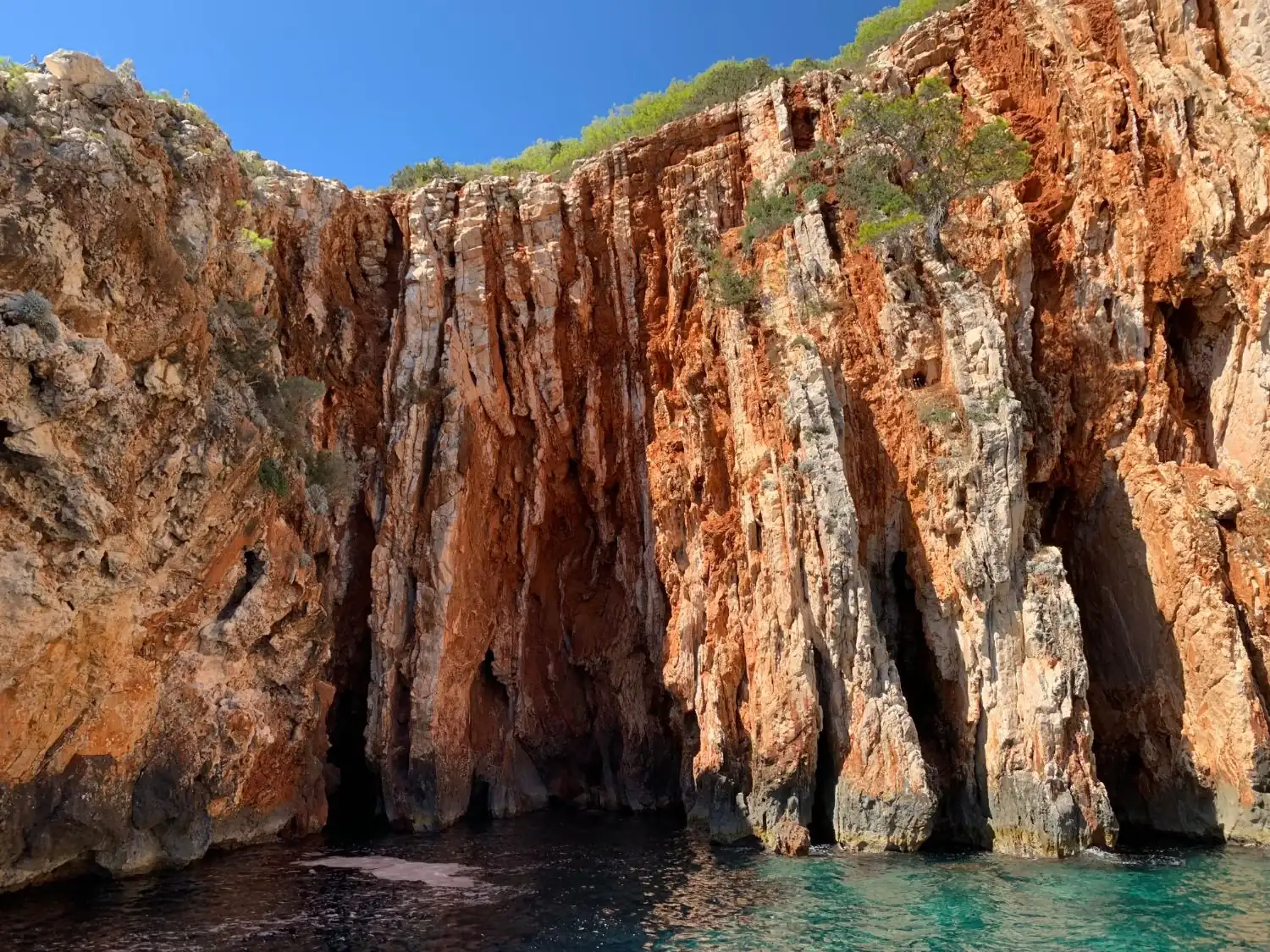
Hvar Town is the perfect stop on a day at sea. Spend the morning swimming in the Pakleni Islands right in front of the harbour, see the orange cliffs of the Red Rocks on the south coast, and walk through the old town in the late afternoon, when the day visitors have left. For more ideas on the island, see our guide to the Pakleni Islands.
A typical private day from Split: the Red Rocks, a swim and lunch in the Pakleni Islands, then the old town and the fortress before heading home in the evening light.
Tips for your visit
Wear comfortable shoes – the stone steps are steep and polished smooth.
Climb to the fortress early or at sunset to avoid the heat.
Cover your shoulders when you enter churches and monasteries.
Book dinner in the old town in July and August.
Carry some cash for museum tickets and small cafés.
Plan your day in Hvar
Tell us your date and group size, and we will plan a day from Split that brings you to Hvar's old town at the right time – with the Pakleni Islands and the Red Rocks on the way.
You can also explore boat charter on Hvar, compare ferry, catamaran and private boat from Split to Hvar or browse our boats.